Plant milks are widely fortified with calcium and vitamin B12, which leads people to assume they match dairy across the board. Iodine is the exception, and it is the one most likely to be missing.
How large is the gap?
Research examining UK plant milks found iodine content to be a small fraction of that in cows milk, with unfortified products containing negligible amounts.
Cows milk in the UK typically supplies somewhere in the region of 50 to 100 micrograms per glass depending on season. An unfortified plant milk supplies close to nothing.
Substituting one for the other therefore removes iodine almost entirely, while the calcium and B12 may be replaced perfectly well.
Why is iodine fortified less often?
Fortification in the UK is voluntary rather than mandated, so manufacturers choose what to add. Calcium and B12 are the nutrients consumers ask about, so those are added first.
Iodine has a lower public profile despite being at least as important, so there has been less commercial pressure to include it.
There are also technical considerations, since iodine can affect taste and stability at higher levels.
Which products are least likely to be fortified?
Organic plant milks, because organic certification rules in the UK generally do not permit the addition of most vitamins and minerals.
This catches people out regularly, since organic is often assumed to be the better choice. For fortification purposes it is usually the worse one.
Home made plant milks contain no added nutrients at all, which is worth remembering if you make your own.
How do you check?
Look at the nutrition panel for iodine specifically, expressed in micrograms with a percentage of the reference value.
Do not infer it from front of pack claims about fortification, since those usually refer to calcium and vitamins. The absence of iodine from the panel means it has not been added.
Some brands now fortify to roughly match dairy, and these state it clearly.
Does the type of plant milk matter?
Not intrinsically. Soya, oat, almond, coconut and rice milks all contain minimal natural iodine, so the difference between them is entirely down to whether iodine has been added.
Soya milk is generally the closest match to dairy for protein, which is a separate consideration worth knowing when substituting.
Does anything else in plant milk affect thyroid?
Soya contains compounds that can interfere with thyroid hormone production, and this is generally only relevant when iodine intake is already low.
With adequate iodine, soya consumption has not been shown to cause thyroid problems in people with normal thyroid function. It may affect absorption of levothyroxine, so anyone taking that should space it from soya products.
What should you do instead?
- Choose a plant milk that states iodine on the nutrition panel
- Take a supplement providing 140 to 150 micrograms of potassium iodide
- Include eggs or fish if your diet allows them
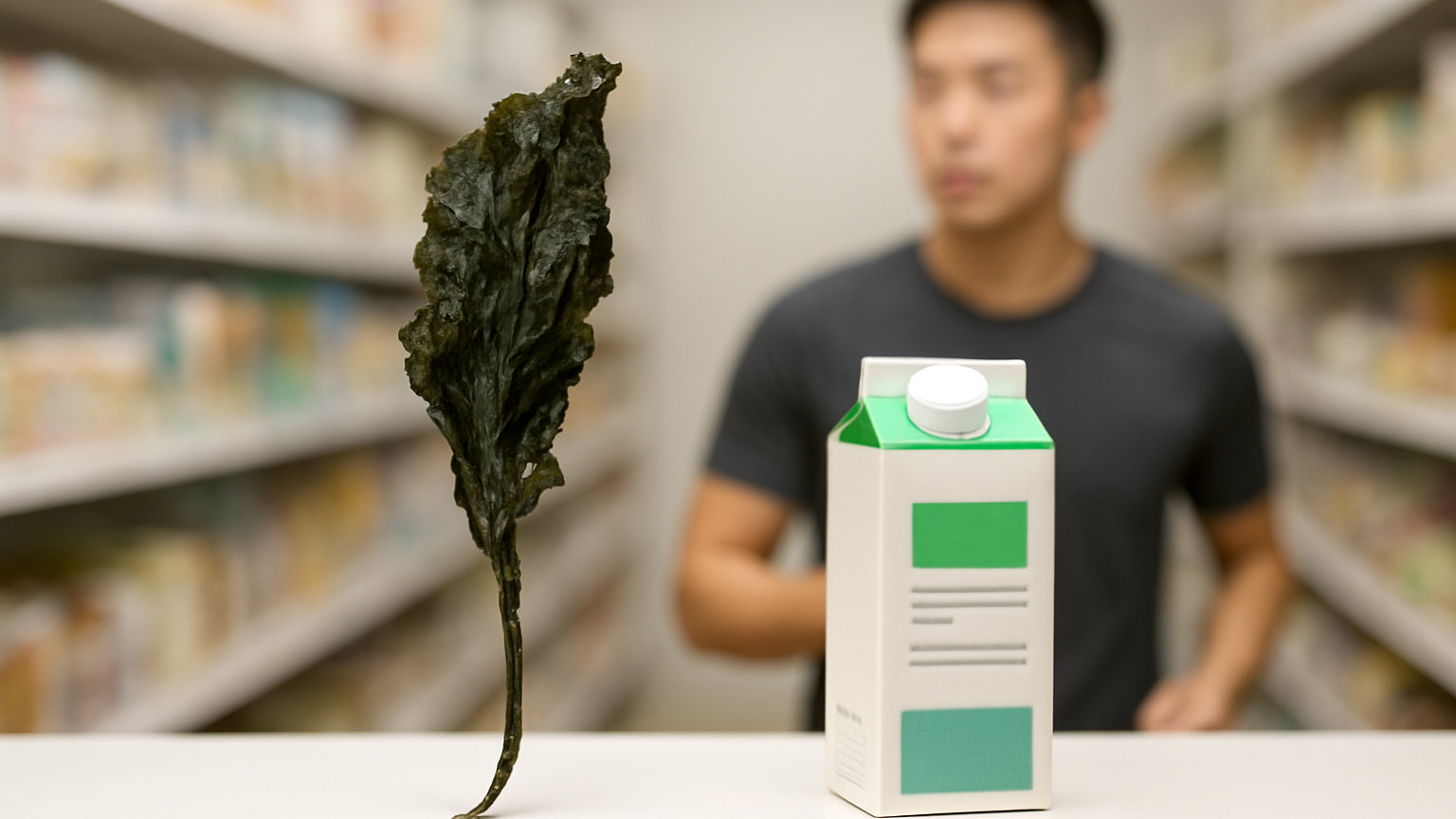
- Use nori in moderation as a contribution rather than a plan
Avoid kelp supplements, where iodine content is variable and often far above the 600 microgram upper limit.
Who should be most careful?
Anyone pregnant, planning pregnancy or breastfeeding, since iodine is critical for fetal brain development and requirements rise.
Children too, since they consume plant milks in place of dairy in growing numbers and iodine matters for cognitive development. This article is general information and not medical advice.
Are other plant based products fortified?
Some yoghurt alternatives and a few meat substitutes contain added iodine, and it remains far from standard. The same label check applies.
Fortification varies between products from the same brand, so checking each one rather than assuming brand consistency is worthwhile.
What if you only use plant milk in tea and coffee?
Then the quantity is small either way, and the iodine question turns on the rest of your diet rather than on the milk.
The gap matters most for people using plant milk in the volumes they previously drank cows milk, which is where a substantial iodine source disappears.