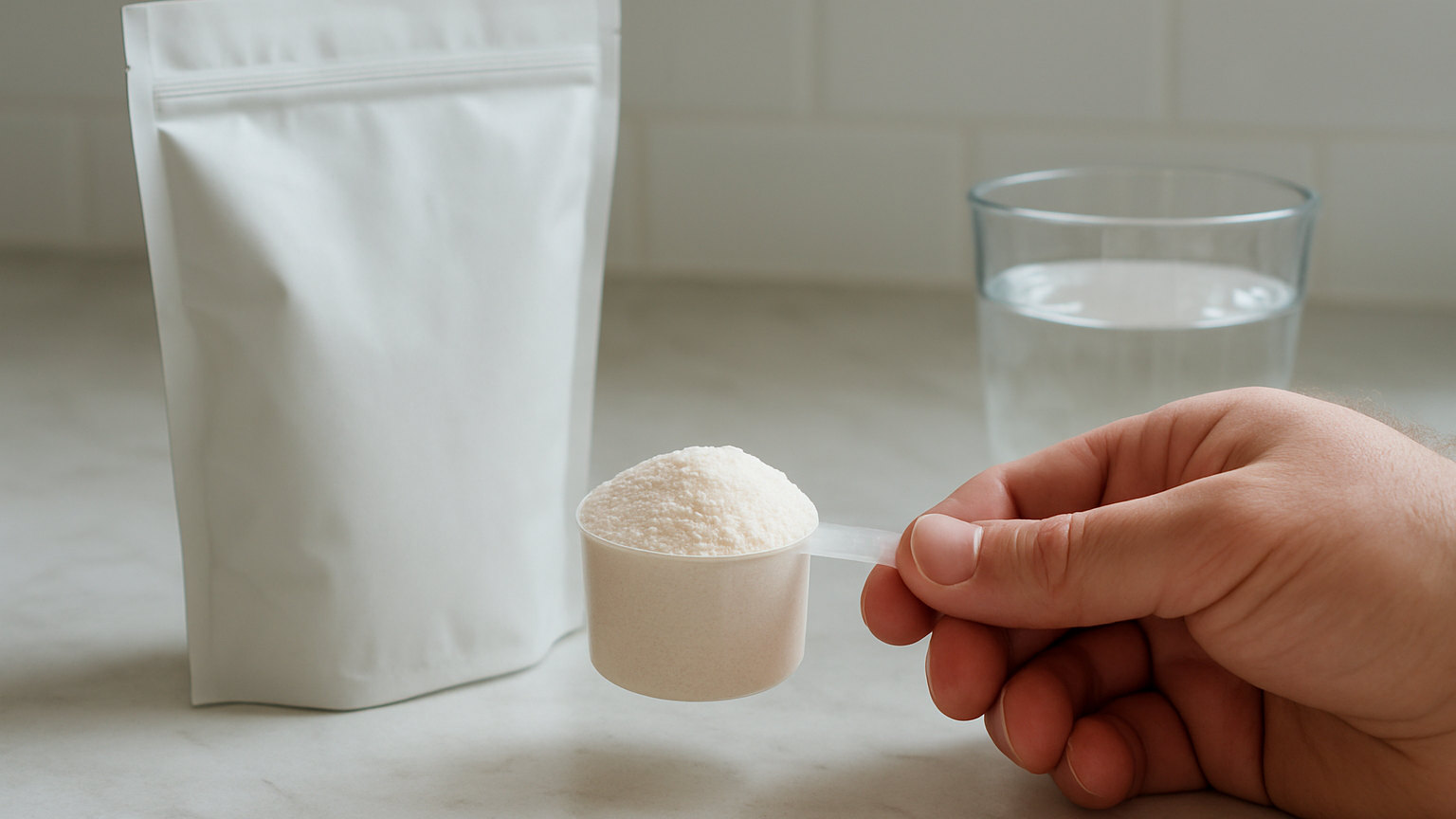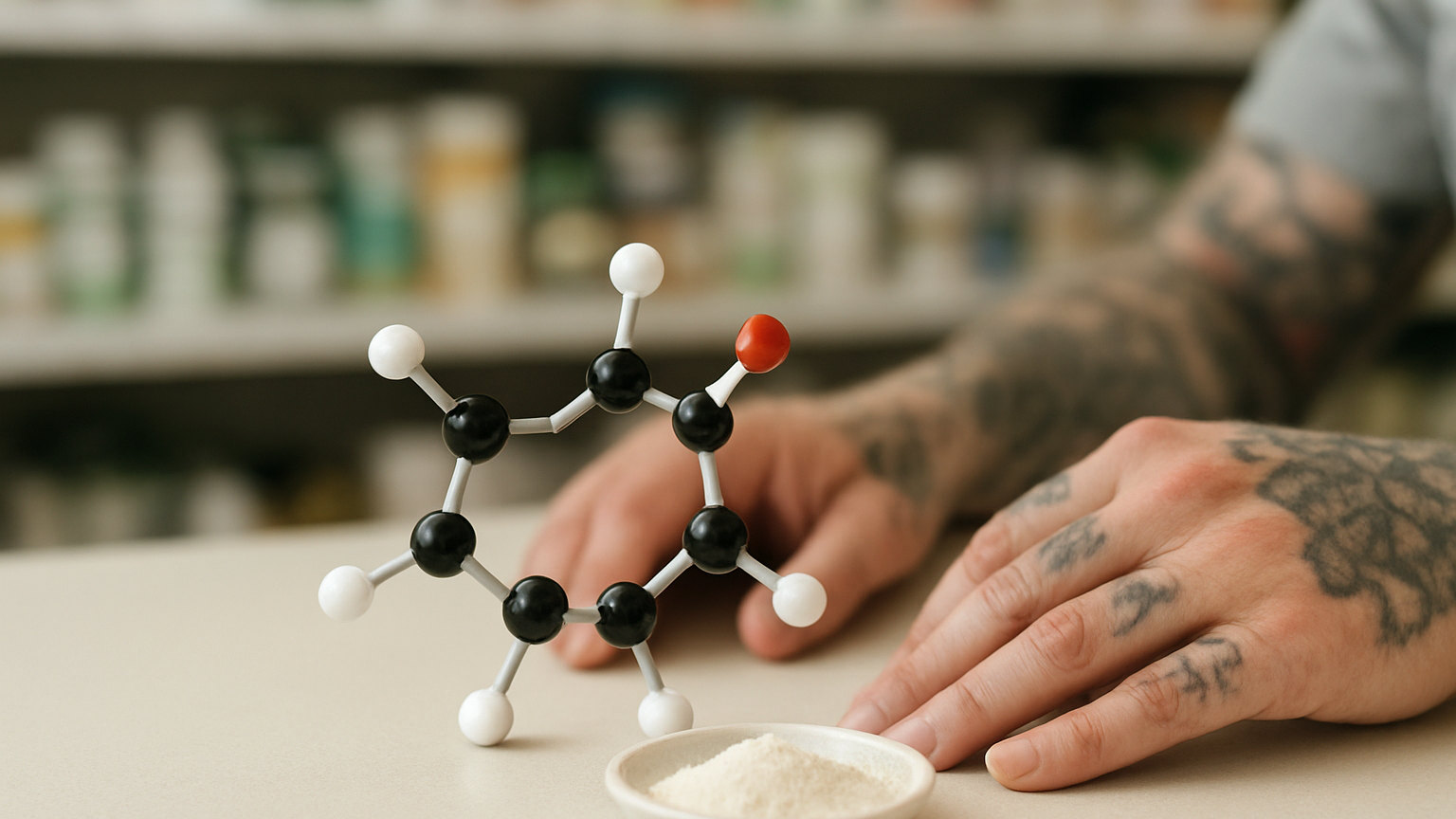
Collagen is sold alongside whey in the protein section, which invites the assumption that they are interchangeable. For muscle building purposes they are not, and the difference is substantial rather than marginal.
What is collagen?
The most abundant protein in the body, forming the structural framework of skin, tendons, ligaments, cartilage and bone.
Supplements typically contain hydrolysed collagen or collagen peptides, derived from animal hides, bones or fish and broken down for absorption.
Why is it a poor muscle protein?
Its amino acid profile is unusual and heavily skewed. Collagen is around a third glycine, with high proline and hydroxyproline content.
It contains no tryptophan at all, which makes it an incomplete protein by definition, and it is very low in leucine, the amino acid that triggers muscle protein synthesis.
Whey contains around 10 to 11 per cent leucine by weight. Collagen contains around 2 to 3 per cent, which is a substantial difference for the amino acid that triggers the response.
What do comparisons show?
Studies comparing collagen with whey for muscle protein synthesis have found whey producing a substantially greater response.
Protein quality scoring systems rate collagen very low, since scores account for limiting amino acids and collagen is limiting in tryptophan entirely.
Counting collagen towards a daily protein target for muscle purposes is therefore misleading, since it contributes far less usefully than the gram figure suggests.
Does it have other uses?
Possibly, and this is a separate question from muscle. Trials of collagen peptides for skin elasticity and hydration have reported modest improvements, though many were industry funded and used varying protocols.
Studies in joint pain, particularly in athletes and people with osteoarthritis, have reported some symptom improvement, with reviewers generally describing the evidence as promising rather than established.
Research on tendon and ligament adaptation, often combined with vitamin C and specific loading exercises, is an active area with some encouraging early findings.
Does eating collagen build collagen?
Not directly. Collagen is digested into amino acids and peptides like any protein, and the body builds its own collagen from available amino acids.
The proposed mechanism involves specific peptides surviving digestion and acting as signals to fibroblasts rather than as building blocks, which is plausible and not fully established.
Vitamin C is genuinely required for collagen synthesis, which is why it appears alongside collagen in many products and why the pairing has a real rationale behind it.
Should you take both?
- Whey or another complete protein for muscle and general protein needs
- Collagen separately if you want to try it for skin or joints
- Do not count collagen towards a muscle building protein target
- Ensure adequate vitamin C, which collagen synthesis requires
Is it worth the cost?
Collagen is generally more expensive per gram than whey and contributes less to protein requirements, so as a protein source it is poor value.
As a specific intervention for skin or joints it may be worth trying, with realistic expectations and over several months rather than weeks.
What is the summary?
Collagen and whey are both proteins and are not substitutes. Use whey or another complete source for protein, and treat collagen as a separate product with separate claims.
This article is general information and not medical advice.
What about bone broth and gelatin?
Both are collagen derived and carry the same amino acid limitations. Bone broth in particular contains variable and often modest amounts of protein.
Neither counts usefully towards a protein target for muscle purposes, whatever their other merits.
How long would a trial take?
Studies reporting skin or joint effects generally ran for eight to twelve weeks or longer, so a shorter trial tells you very little.
Doses used have typically been in the range of 2.5 to 15 grams daily depending on the outcome studied, which is worth checking against what a product supplies.
What is the summary?
Collagen is a poor protein for muscle and a plausible product for skin and joints. Do not use it as a substitute for whey or count it towards a protein target.