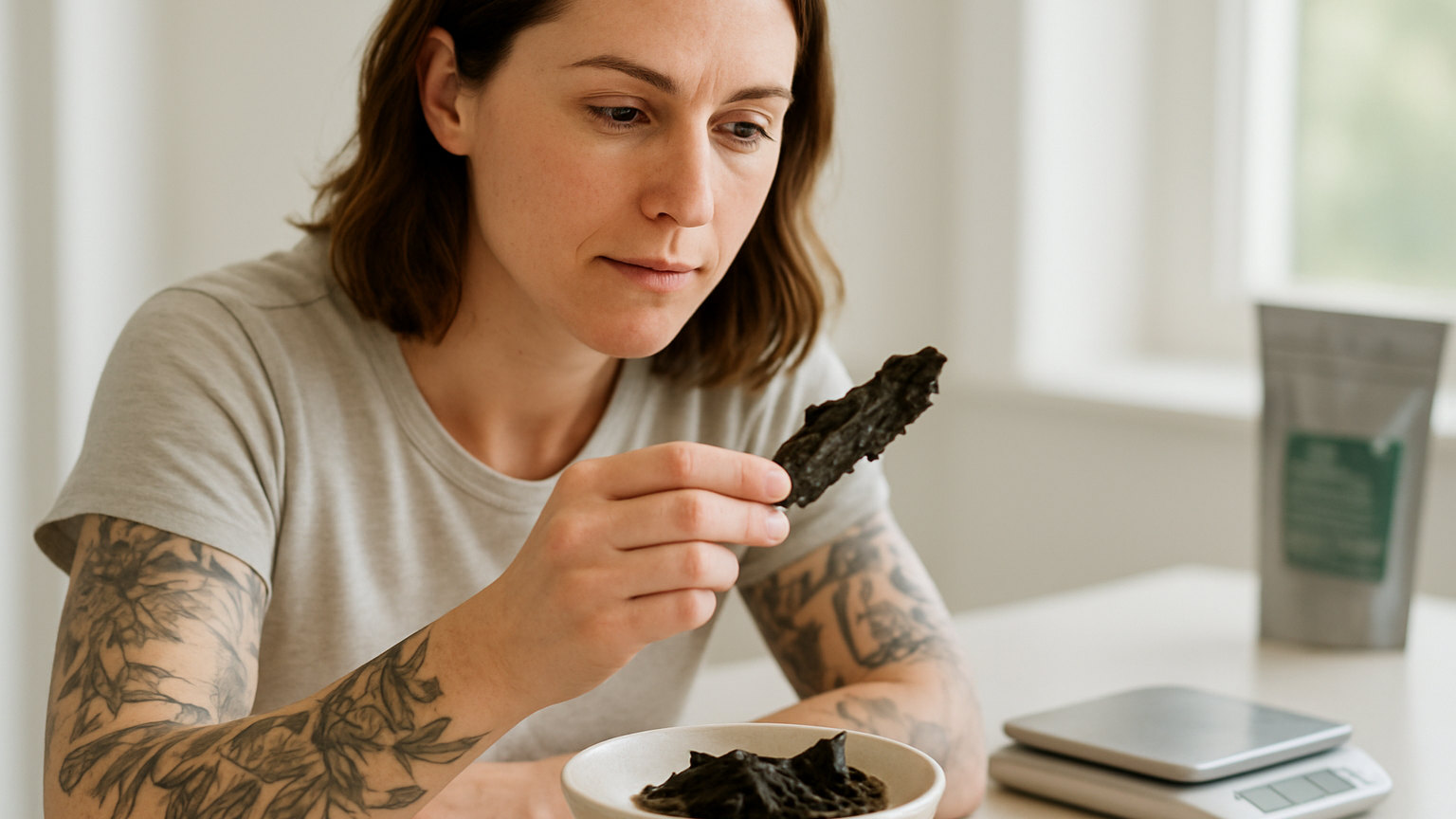
Seaweed is by far the richest dietary source of iodine and one of the hardest to use safely. The problem is not that it contains too little but that the amount is unpredictable and frequently far too much.
How much iodine does seaweed contain?
It varies by orders of magnitude between species. Kelp and kombu are the highest, with a single gram capable of containing thousands of micrograms.
Nori, used in sushi, is considerably lower, typically supplying a few tens of micrograms per sheet. Wakame sits between them.
Against a daily requirement of 140 micrograms and an upper limit of 600, a small amount of kelp can exceed the limit many times over in one sitting.
Why is the content so variable?
Seaweed concentrates iodine from seawater, and how much depends on species, water conditions, harvest season, processing and drying method.
Even within a single species and brand, batch to batch variation can be substantial. This makes it impossible to know what you are consuming without laboratory testing.
Products often carry no iodine content on the label at all, and where they do, testing has sometimes found the actual amount to differ considerably.
What can excess iodine do?
Cause thyroid dysfunction in either direction. High iodine can suppress hormone production, causing an underactive thyroid, or trigger overproduction in susceptible people.
Cases of both have been documented following regular kelp consumption or kelp supplement use, and thyroid function generally recovers once intake stops.
People with existing thyroid conditions or nodules are more vulnerable, as are those who were previously iodine deficient.
What does UK advice say?
Food safety guidance suggests eating seaweed no more than once a week, particularly for children and pregnant women.
Hijiki should be avoided entirely because of its inorganic arsenic content, which is a separate concern from iodine and has prompted specific warnings.
Are there other contaminants?
- Arsenic, particularly in hijiki
- Cadmium and lead, which seaweed can accumulate from water
- Variable levels depending on where it was harvested
Seaweed harvested from cleaner waters and from reputable suppliers is lower risk, and consumers have little ability to verify this.
Which types are the safer options?
Nori is the most predictable and lowest in iodine, making it the reasonable choice for regular use in modest amounts.
Kombu used to make stock releases substantial iodine into the liquid, so a broth made with it may contain far more than expected. Kelp in any form is the highest risk.
What about kelp supplements?
These are best avoided. Analyses have found iodine content varying widely from label claims, and cases of thyroid dysfunction have followed their use.
If you need iodine, a supplement stating a specific microgram amount of potassium iodide is predictable in a way that kelp is not, and it costs less.
Can seaweed be part of a plan?
As a contribution rather than a strategy. Nori in sushi or as a garnish adds iodine without much risk of overshooting.
Relying on seaweed to meet a target of 140 micrograms daily is difficult to do accurately, and the consequences of getting it wrong fall on the thyroid in both directions.
Anyone with a thyroid condition, pregnant or breastfeeding should be particularly cautious. This article is general information and not medical advice.
Why do the numbers vary so widely?
Because seaweed absorbs iodine from seawater continuously, and how much depends on species, water iodine levels, temperature, depth and how long it grew.
Processing matters too. Rinsing, soaking and boiling all reduce iodine content, sometimes considerably, which adds another layer of unpredictability.
What about traditional Japanese diets?
Iodine intakes in Japan are far above UK levels, largely from seaweed, and thyroid disease patterns differ there in ways researchers have studied with interest.
Those intakes have been sustained over generations alongside other dietary and genetic factors, so they are not straightforwardly transferable as a model for someone adding kelp to a Western diet.
The UK position is a good illustration of how public health can rest on arrangements nobody designed, and how quickly those arrangements can be undermined by ordinary changes in what people buy.