Burdock root appears in detox teas and skin products, and it carries one of the more instructive safety stories in herbal medicine.
What is burdock root?
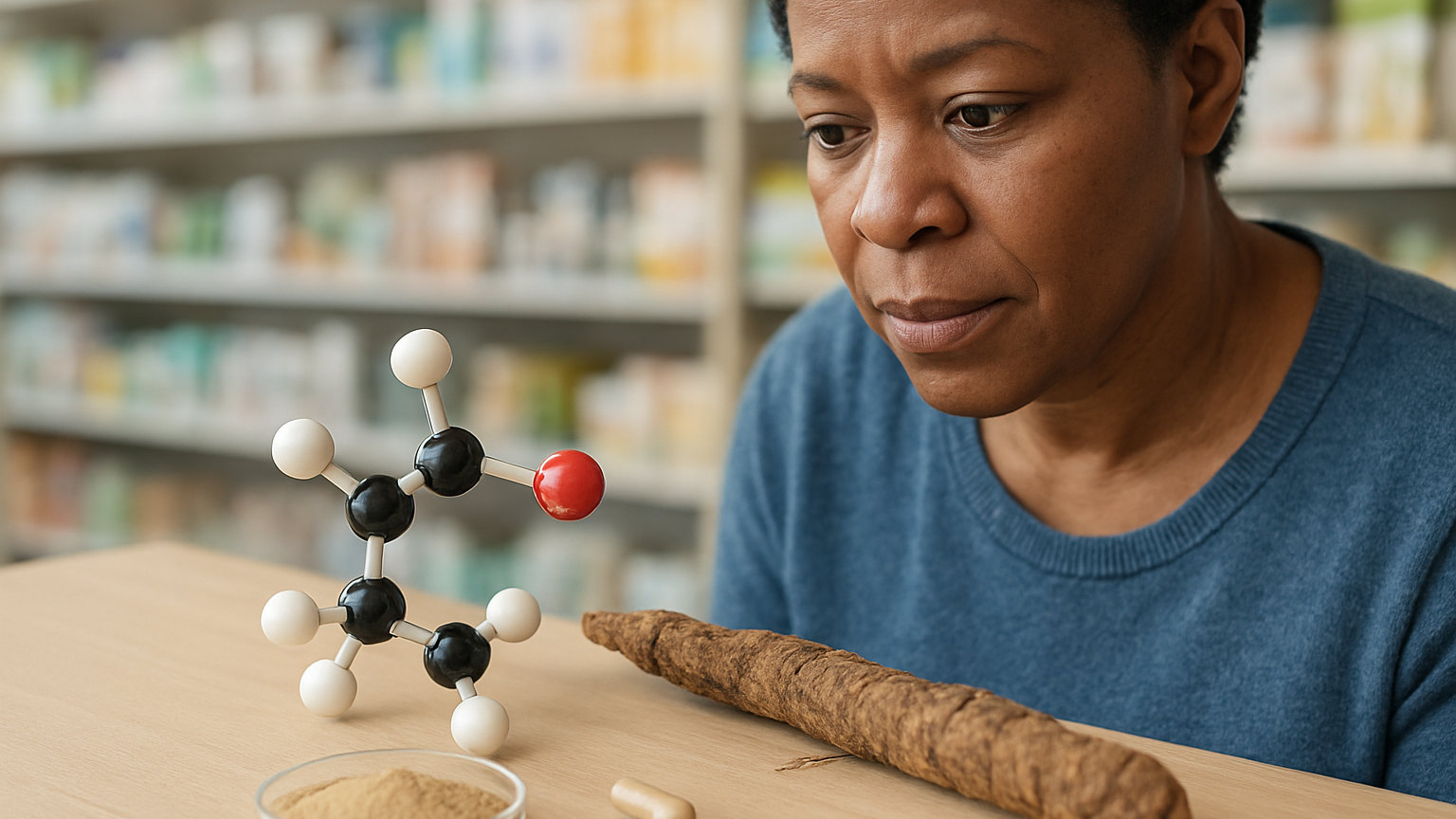
The root of Arctium lappa, a large biennial plant whose burrs famously inspired the invention of hook and loop fastening.
Burdock root is eaten as a vegetable in Japan, where it is known as gobo, which puts its safety profile in useful context.
What do people take it for?
Skin complaints including acne and eczema, where it has long traditional use.
As a blood purifier or detox ingredient, which is how it appears in herbal tea blends.
As a mild diuretic and digestive tonic.
What does blood purifier mean?
Nothing physiological. Blood is filtered continuously by the kidneys and liver, and no herb improves that process.
The term describes a traditional category rather than a mechanism, and products using it rarely specify what is being removed.
What does the research show?
Very little. Human trials of burdock root are scarce, and laboratory studies of antioxidant and antimicrobial activity do not establish clinical effects.
Its use rests on tradition and on food use rather than on trial evidence.
What is the contamination story?
Cases of anticholinergic poisoning were reported historically after people drank burdock root tea.
Investigation found the products had been contaminated with belladonna root, which resembles burdock and is highly toxic.
It remains a good illustration of why botanical identity verification matters for herbal products.
Who should be careful?
- Anyone allergic to plants in the daisy family
- People taking diuretics, since burdock root has a traditional diuretic action
- Anyone on diabetes medication, given possible glucose lowering
- People on anticoagulants
- Pregnant women, where medicinal doses are not recommended
What are the side effects?
Generally well tolerated, with allergic reactions the main concern for susceptible people.
The fresh vegetable is eaten routinely without difficulty in Japanese cooking.
What actually helps skin conditions?
For acne, topical treatments and, where needed, prescribed options with good evidence.
For eczema, emollients and topical steroids during flares.
Persistent skin problems are worth seeing a GP about rather than treating with tea.
What should you look for?
The botanical name, the plant part, and a manufacturer who verifies botanical identity.
That last point matters more for burdock root than for most herbs.
Is it worth taking?
As a vegetable it is perfectly good food. As a supplement the evidence does not support the claims made for it.
What is the summary?
Burdock root is taken for skin and as a detox ingredient, has minimal evidence, and its history illustrates why plant identification matters.
This article is general information and not medical advice.
What about detox teas generally?
Burdock root appears alongside dandelion, nettle and senna in many of these products.
Where senna is included, the noticeable effect is a laxative one rather than anything to do with purification.
What should you expect?
Very little beyond a pleasant earthy tea, which is a reasonable thing to enjoy on its own terms.
Who might it suit?
Someone drinking it as a tea or eating the root as a vegetable rather than expecting a therapeutic effect.
Anyone with a daisy family allergy should avoid it.
What does it illustrate?
That correctly identifying a plant is a genuine quality control step rather than a formality.
The belladonna contamination cases make that point better than any general argument.
Who might benefit from the vegetable?
Anyone wanting more fibre and variety in their diet, since burdock root is high in inulin and cooks well.
That is a food argument rather than a supplement one.
It is widely available in Asian grocers.
Anyone with persistent skin problems should see a GP, since effective treatments exist.
Herbal teas are a poor substitute for those.
Herbal identity testing is a genuine part of quality manufacture rather than an optional extra.
Reputable manufacturers verify the species before use.
Species verification is worth asking about.