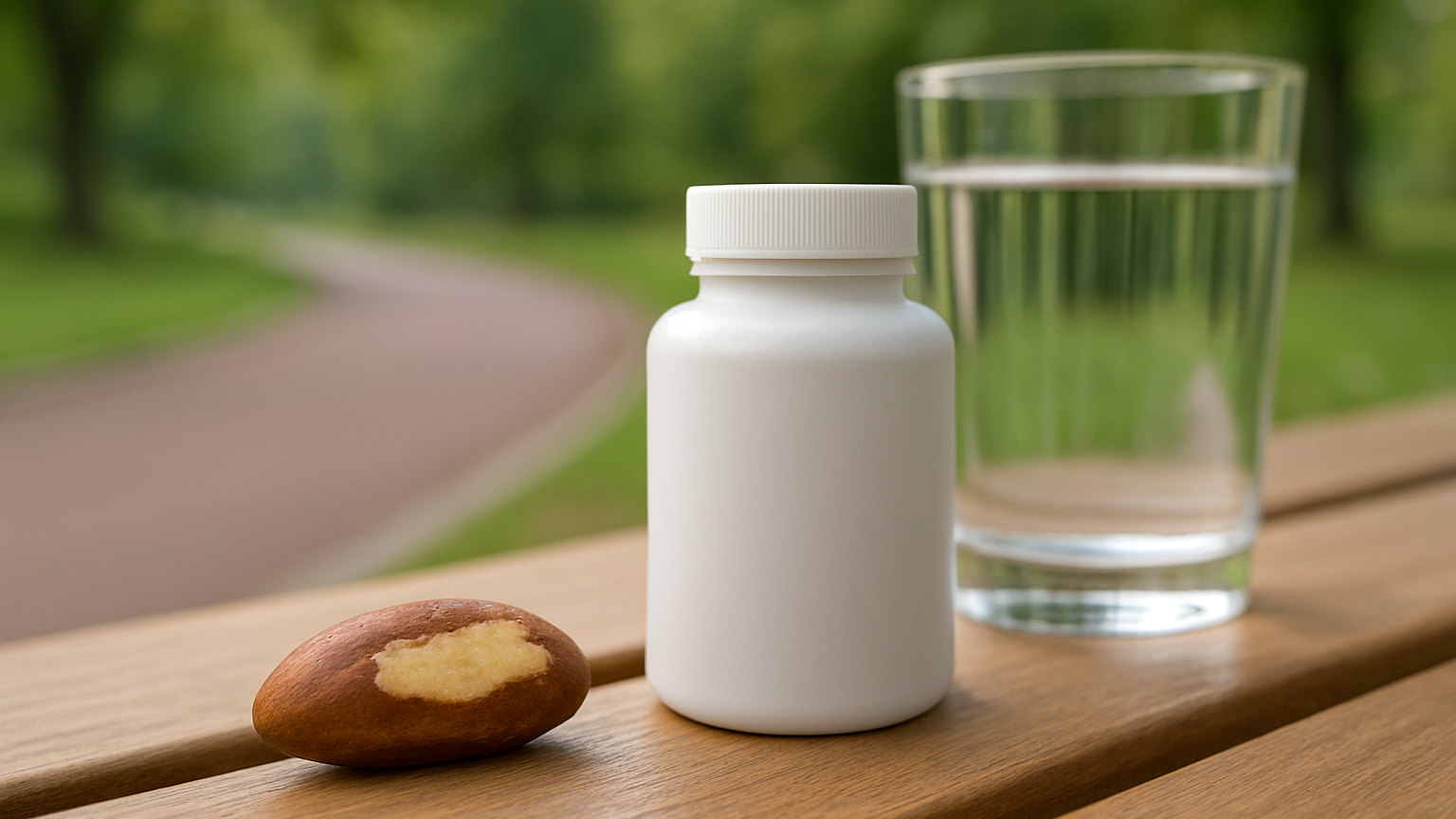
Brazil nuts contain more selenium than any other food, by a considerable margin. They are also among the most variable foods in existence for any nutrient, which makes the common advice to eat one or two a day less precise than it sounds.
How much selenium do they contain?
Commonly quoted figures suggest a single nut supplies somewhere around 70 to 90 micrograms, which is more than the UK daily reference intake of 60 to 75.
The actual range is far wider than those figures suggest. Analyses have found nuts containing anywhere from a few micrograms to several hundred, depending on where the tree grew.
Nuts from selenium rich areas of the Amazon basin can contain many times more than those from lower selenium regions, and the two are indistinguishable once packaged.
Why is the variation so large?
Because Brazil nut trees have deep root systems that draw selenium from a large volume of soil, and soil selenium varies enormously across the growing regions of Brazil, Bolivia and Peru.
The tree concentrates whatever is available, so a nut is essentially a record of the soil it came from. Packets rarely state the origin, and no packet states the selenium content.
How many are safe?
Common advice suggests one or two a day, and that reflects an average rather than a guarantee.
Eating a handful daily is where problems arise. Cases of selenosis, with hair loss, brittle nails and gastrointestinal upset, have been reported in people eating large quantities of Brazil nuts regularly.
The upper limit is 300 to 400 micrograms a day depending on the guidance used, which a handful of high selenium nuts could exceed.
What does excess look like?
- A garlic like odour on the breath, which is characteristic
- Hair loss and brittle or discoloured nails
- Nausea, diarrhoea and a metallic taste
- Skin rashes and irritability
- In severe cases, neurological symptoms
These develop over weeks to months of excessive intake and generally resolve once it stops, though hair and nail changes take time to grow out.
Are they still worth eating?
Yes, in moderation, and they are an efficient way to cover selenium for anyone who likes them. Two or three a week is a reasonable pattern for someone eating an otherwise varied diet.
They also supply magnesium, healthy fats and fibre. The issue is quantity rather than the food itself.
Do they contain anything else of note?
Brazil nuts contain small amounts of naturally occurring radium absorbed from soil, which sounds alarming and is not considered a health concern at normal consumption levels.
They are also high in energy, as all nuts are, which is worth knowing if you are eating them daily.
How should they be stored?
In a cool place or the fridge, since their high fat content makes them prone to going rancid. A bitter or paint like taste indicates they are past their best.
Rancid nuts are unpleasant rather than dangerous, and the selenium content is unaffected.
Is a supplement more predictable?
Considerably, which is the main argument for one if you specifically want to control your selenium intake.
A supplement stating 50 or 100 micrograms delivers roughly that, whereas a Brazil nut delivers an unknown amount. For most people the imprecision is acceptable; for anyone managing intake carefully it is not.
This article is general information and not medical advice.
Do other nuts contain selenium?
Far less. Cashews, walnuts and sunflower seeds contain modest amounts, nothing approaching Brazil nuts, since no other common nut concentrates selenium the same way.
That makes Brazil nuts genuinely unique rather than simply the best of a group.
Should you eat them daily?
One a day is a reasonable habit for most people, and it is worth being aware that you may be getting substantially more or less than the average figures suggest.
If you also take a multivitamin containing selenium, factor that in. Two or three nuts a week alongside a varied diet is a more conservative pattern.