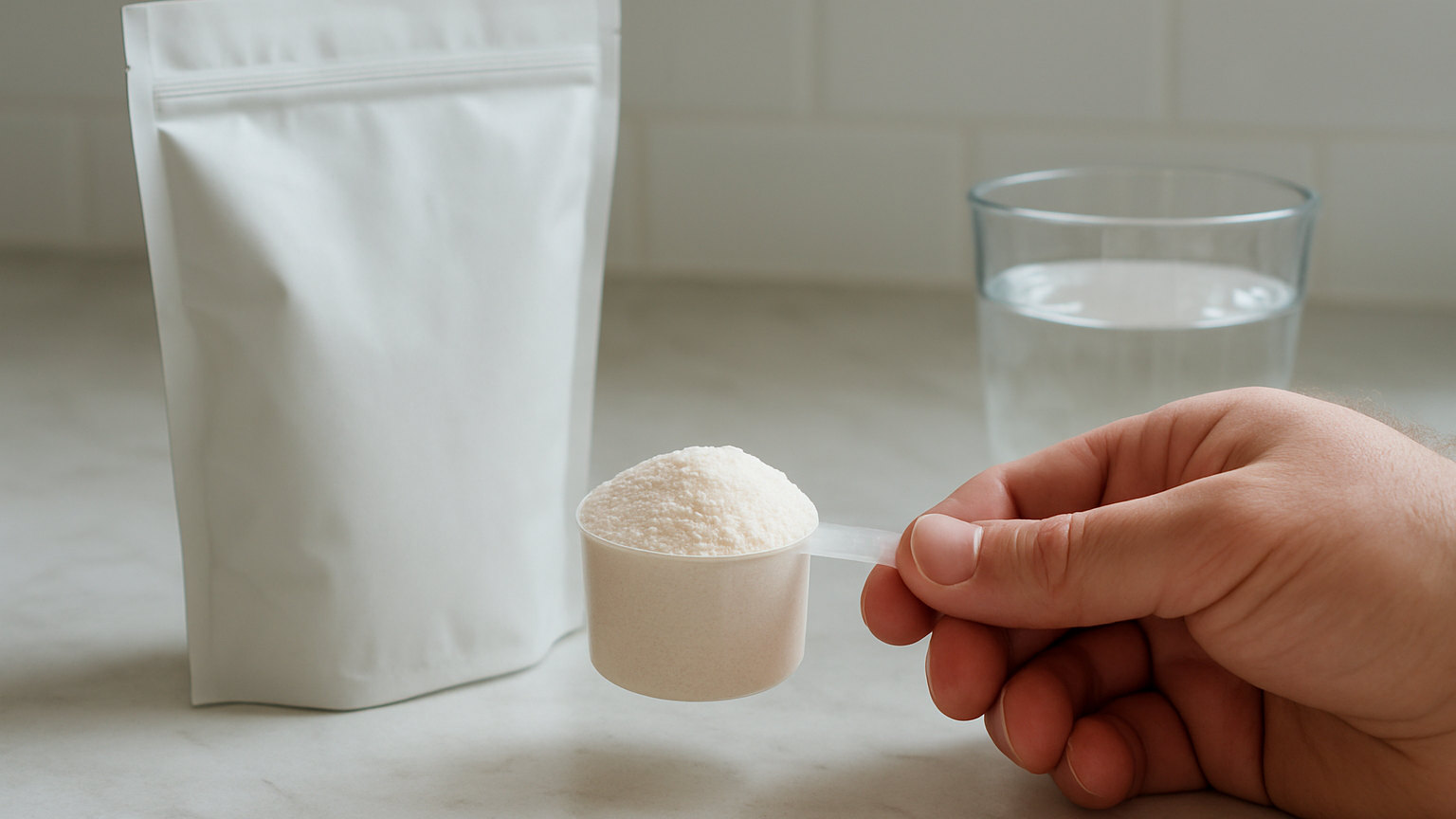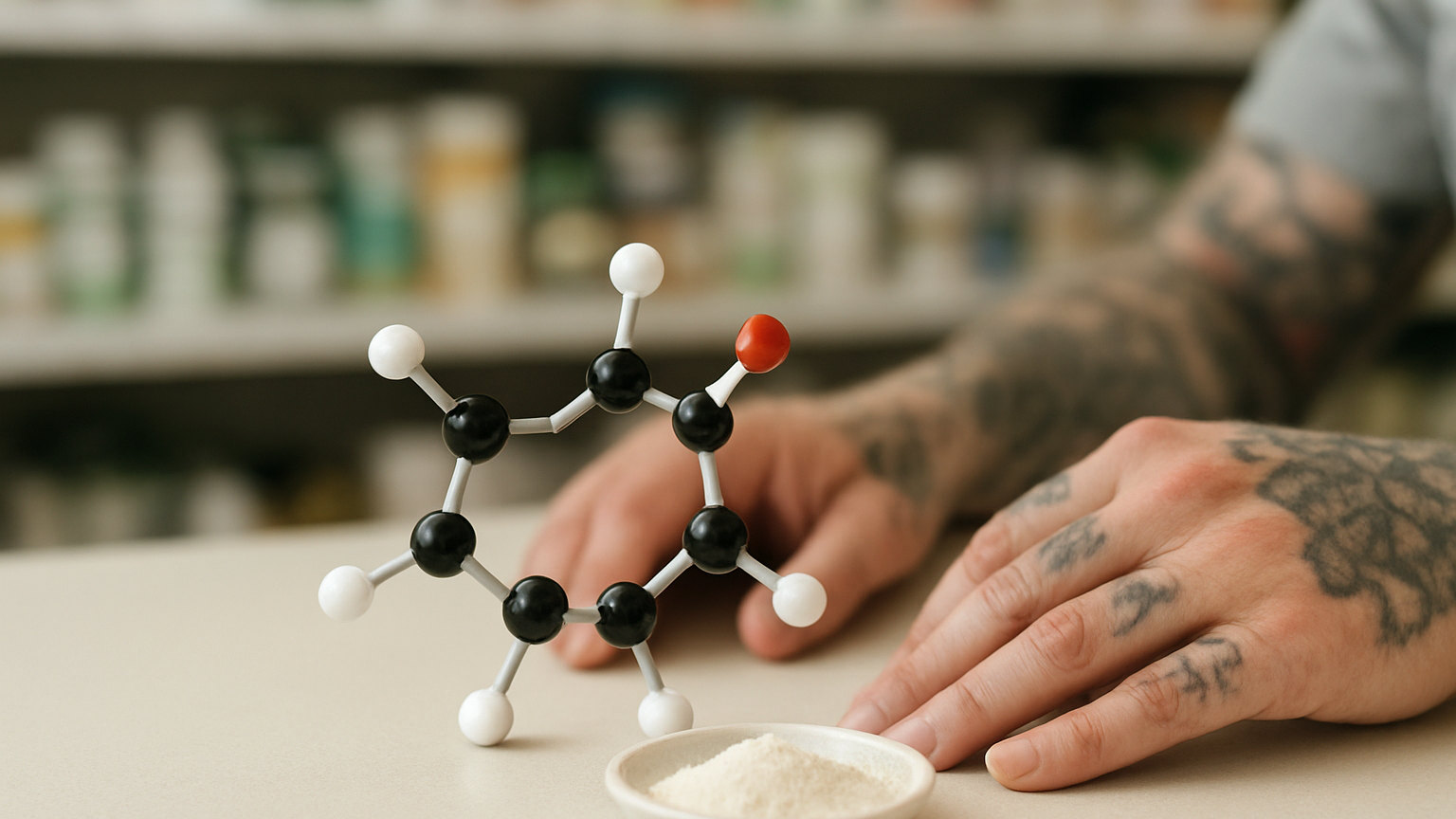
Essential amino acid supplements contain all nine amino acids the body cannot make, while BCAAs contain three of them. That difference matters because muscle protein synthesis requires the full set.
What are the nine essentials?
Histidine, isoleucine, leucine, lysine, methionine, phenylalanine, threonine, tryptophan and valine.
Three of these, leucine, isoleucine and valine, are the BCAAs. The other six are absent from a BCAA supplement entirely.
Why does that matter?
Because building muscle protein requires all of them in appropriate proportions. Leucine triggers the process, and the process needs materials.
Supplying leucine without the other essentials raises the signal without the substrate, and the body must break down existing protein to supply what is missing.
Research comparing the two has found EAAs producing substantially greater muscle protein synthesis than BCAAs alone.
What does the research show?
Studies of essential amino acid supplementation have consistently demonstrated increases in muscle protein synthesis, including at relatively modest doses.
Reviews examining BCAAs have concluded they cannot support increased synthesis in the way complete amino acid provision can.
Doses of around 6 to 15 grams of EAAs have been shown to stimulate synthesis effectively.
How do they compare with whey?
Whey contains all nine essentials plus the non-essential amino acids, in a food matrix that digests over a longer period.
Gram for gram of essential amino acids, whey is usually considerably cheaper. A 25 gram serving supplies around 11 grams of essentials.
EAAs are absorbed faster and free of lactose, fat and carbohydrate, which suits some situations.
When might EAAs be preferable?
- Where whole protein cannot be tolerated digestively
- During training, where a lighter drink sits better than protein
- In clinical situations including some malabsorption conditions
- For older adults with poor appetite, where volume is limiting
- Where minimising calories matters and every gram must be essential
Are they worth the cost?
For most people, no, since whey delivers the same essentials more cheaply alongside everything else.
Where they earn their place is in the specific situations above rather than as a general alternative to protein.
Should you switch from BCAAs?
If you are buying one of the two, EAAs are the better product. The more useful question is whether either is needed alongside adequate dietary protein.
For most people the answer to that is no, and the money is better spent on food or whey.
What is the summary?
EAAs are meaningfully better than BCAAs because they supply what muscle protein synthesis needs. Whole protein is better than both for most purposes and usually cheaper.
This article is general information and not medical advice.
What doses do EAAs use?
Research has demonstrated synthesis responses at doses from around 6 grams upwards, with 10 to 15 grams commonly used.
These are smaller quantities than a protein serving because everything in them is essential, with no non-essential amino acids included.
Do they taste better?
Generally worse. Free amino acids are bitter, and EAA products often require substantial flavouring and sweetening to be palatable.
Whey is considerably more pleasant to drink, which is a practical consideration for something taken daily.
What is the summary?
EAAs are genuinely better than BCAAs because they supply what synthesis requires. Whole protein beats both for most purposes at lower cost.
Reserve EAAs for situations where whole protein is impractical rather than treating them as a routine addition.
Do they work faster than protein?
Free amino acids are absorbed faster than intact protein, producing a quicker rise in blood levels.
Whether that speed matters is unclear, since the anabolic window is far wider than once believed and total daily intake dominates.
Who should consider EAAs?
Older adults with poor appetite, people recovering from illness or surgery, and anyone where the volume of whole protein is genuinely limiting.
These are clinical rather than gym situations, which is where amino acid supplementation has its clearest role.
For anyone comparing on cost, calculating price per gram of essential amino acids across whey, EAAs and BCAAs makes the ranking obvious quickly.