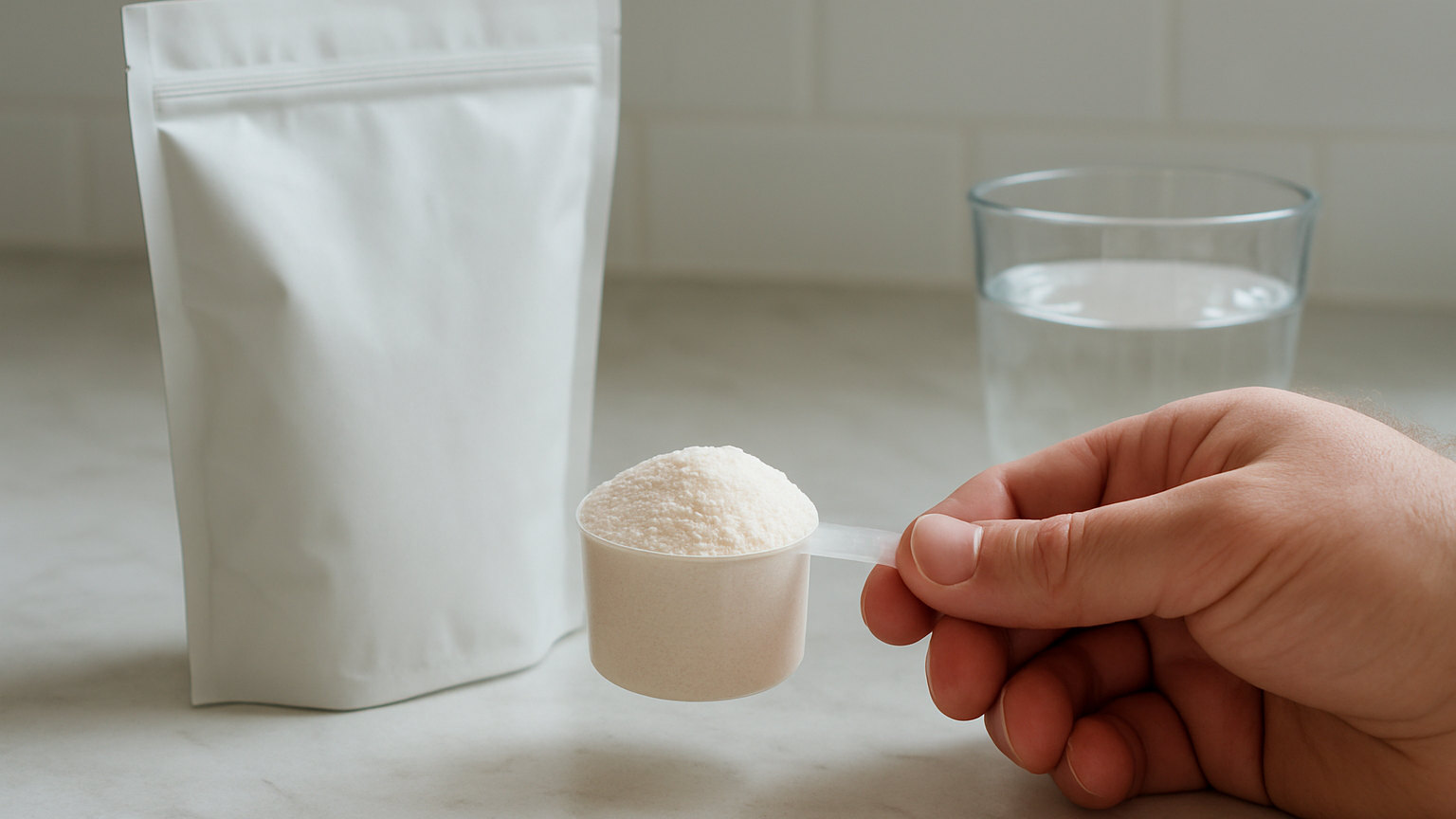
Beta alanine has a reasonably good safety record for a supplement, with studies extending to six months and position stands from sports nutrition bodies describing it as safe at recommended doses.
What do the safety studies show?
Trials lasting up to 24 weeks have reported no clinically significant adverse effects beyond paraesthesia.
Blood markers including liver and kidney function, blood counts and metabolic panels have been examined in several studies without concerning findings.
Position stands describe beta alanine as safe in healthy populations at doses of 4 to 6 grams daily.
What is paraesthesia?
The tingling, prickling sensation across the face, neck and hands that occurs within twenty minutes of a dose.
It results from beta alanine activating sensory nerve receptors in the skin, is harmless, and resolves within about an hour.
It is dose dependent, so splitting doses to 1.6 grams or less, or using a sustained release form, largely eliminates it.
What is the taurine concern?
Beta alanine and taurine share a transporter for entry into cells, so high beta alanine intake could theoretically reduce taurine uptake.
Animal studies have shown reduced tissue taurine with high dose beta alanine. Human studies have not demonstrated meaningful taurine depletion at supplement doses.
It remains a theoretical concern that has been raised repeatedly and not substantiated in people, and it is one reason some products combine the two.
Who should be cautious?
- Anyone with kidney disease, since supplement clearance may be affected
- People with liver conditions, on general principles
- Pregnant or breastfeeding women, where safety data is absent
- Children and adolescents, where research is limited
- Anyone taking regular medicines, who should check with a pharmacist
The absence of data in these groups reflects that they were not studied rather than that harm has been demonstrated.
Does it interact with medicines?
No significant interactions have been established. Beta alanine is an amino acid and does not act on the pathways most drug interactions involve.
Anyone taking prescribed medicine can check with a pharmacist, which costs nothing.
Is the tingling ever a problem?
Only in the sense of being unpleasant. There is no evidence of any harm from it, and it does not indicate an allergic reaction or intolerance.
Some people find it intolerable and simply stop, which is a reasonable response to an uncomfortable sensation.
Are there long term unknowns?
Studies longer than six months are limited, so very long term use has not been formally examined.
Given that carnosine is a normal muscle constituent and the doses raise it within physiological ranges seen in some athletes naturally, there is no obvious mechanism for concern.
Should you cycle it?
There is no safety rationale for cycling. Carnosine washes out slowly over months if you stop, so breaks simply reduce the level you built.
What is the summary?
Safe in healthy adults at recommended doses, with tingling the only common effect and the taurine concern unsubstantiated in people.
This article is general information and not medical advice.
What about combining with other supplements?
No established interactions with creatine, caffeine, protein or the other common training supplements.
Some products combine it with taurine, addressing the theoretical transporter competition, which is a reasonable precaution rather than a demonstrated necessity.
Should you tell your GP?
Mention it alongside anything else you take, particularly before blood tests or if you develop unexplained symptoms. It is unlikely to be relevant and costs nothing to disclose.
Report suspected reactions through the MHRA Yellow Card scheme.
What is the summary?
Safe in healthy adults at recommended doses across studies lasting up to six months, with tingling the only common effect.
Groups without safety data should avoid it, not because harm is demonstrated but because it has not been examined.
Is the dose important for safety?
The studied range of 4 to 6 grams daily is where the safety data sits. Substantially higher doses have not been examined and produce more tingling without more benefit.
Staying within the researched range is sensible for both reasons.