Protein requirements are among the most argued about numbers in nutrition, largely because different questions get conflated. Preventing deficiency, supporting training adaptation and maximising muscle growth are three different targets with three different answers.
What does UK guidance say?
The reference nutrient intake is 0.75 grams of protein per kilogram of body weight per day, which for a 70 kilogram adult is around 53 grams.
That figure is derived from nitrogen balance studies and represents the amount needed to avoid losing body protein. It is a floor rather than a target.
It was never intended to describe an optimal intake for someone training, which is the source of most of the confusion when people compare it against sports nutrition advice.
What do athletes need?
Sports nutrition bodies generally recommend 1.2 to 2.0 grams per kilogram daily for people training regularly, depending on the type and volume of training.
A widely cited meta-analysis examining resistance training and protein intake found that gains in muscle mass plateaued at around 1.6 grams per kilogram, with the upper confidence limit extending to about 2.2.
For a 70 kilogram person, 1.6 grams per kilogram is around 112 grams a day, roughly double the reference intake.
Does more than that help?
The evidence suggests diminishing returns rather than harm. Studies giving substantially more than 2 grams per kilogram have generally not found additional muscle gains in people already eating adequately.
Very high intakes are not dangerous for people with healthy kidneys, and they displace other nutrients and cost money without adding benefit.
Who needs more than average?
- People doing resistance training with the aim of gaining muscle
- Anyone in a calorie deficit, where higher protein preserves lean mass
- Older adults, who show reduced muscle response to protein
- Endurance athletes with high training volumes
- People recovering from injury, surgery or illness
- Pregnant and breastfeeding women, where requirements rise
Does distribution matter?
Somewhat. Spreading protein across three or four meals appears to stimulate muscle protein synthesis more effectively than concentrating it in one, since each meal triggers a separate response.
Typical guidance suggests around 0.4 grams per kilogram per meal, which for a 70 kilogram person is roughly 28 grams, four times a day.
Total daily intake still matters most, and distribution is a refinement rather than the main lever.
How much is in ordinary food?
A chicken breast supplies around 30 grams, a tin of tuna around 25, three eggs around 18, a pot of Greek yoghurt around 15 to 20, and a portion of lentils around 9.
Reaching 100 grams a day from food is achievable without difficulty for most people who eat meat, fish, eggs or dairy.
Do you need a supplement?
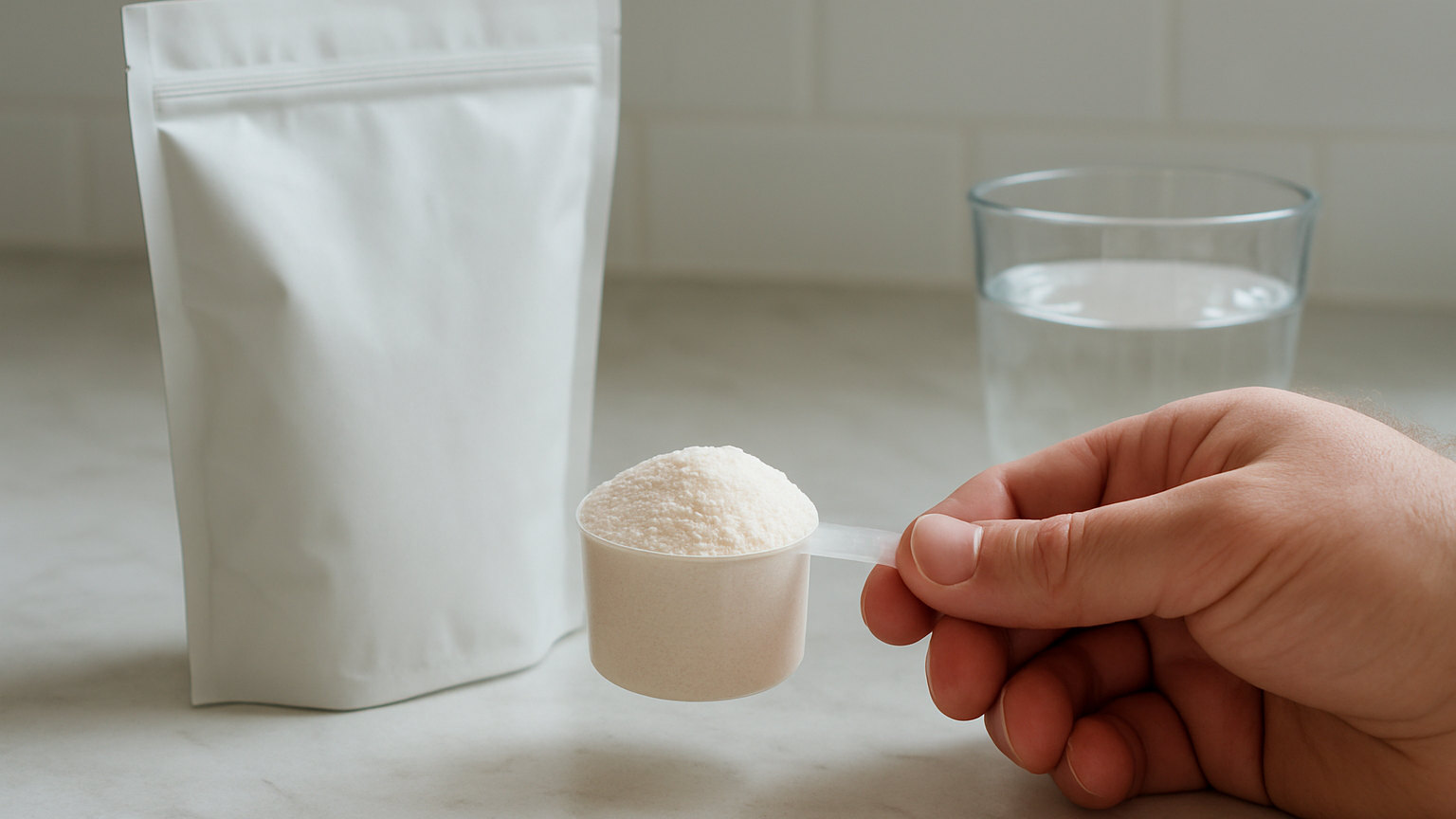
Only if you cannot reach your target through food, which is a question of convenience rather than necessity. Protein powder is food in a convenient format rather than a special substance.
Where it earns its place is practicality: hitting 120 grams a day is easier with a shake than without for many people.
What is the practical approach?
Work out your body weight in kilograms and multiply by 1.6 if you are training for muscle, or by 1.2 for general activity. Spread it across meals and adjust based on results.
This article is general information and not medical advice. Anyone with kidney disease should discuss protein intake with a GP.
Does protein type change the requirement?
Somewhat. Plant proteins are marginally less digestible and lower in leucine, so someone eating exclusively plant protein may benefit from aiming slightly higher within the range.
Mixed diets containing a variety of sources are unlikely to be limited by this, since different foods complement one another across the day.
Is there any risk from higher intakes?
For people with healthy kidneys, the evidence does not support harm at the intakes used by athletes. Meta-analyses examining kidney function in healthy adults on higher protein diets have found no adverse effect.
Anyone with kidney disease should follow specific medical advice, since protein restriction is sometimes appropriate there and general guidance does not apply.