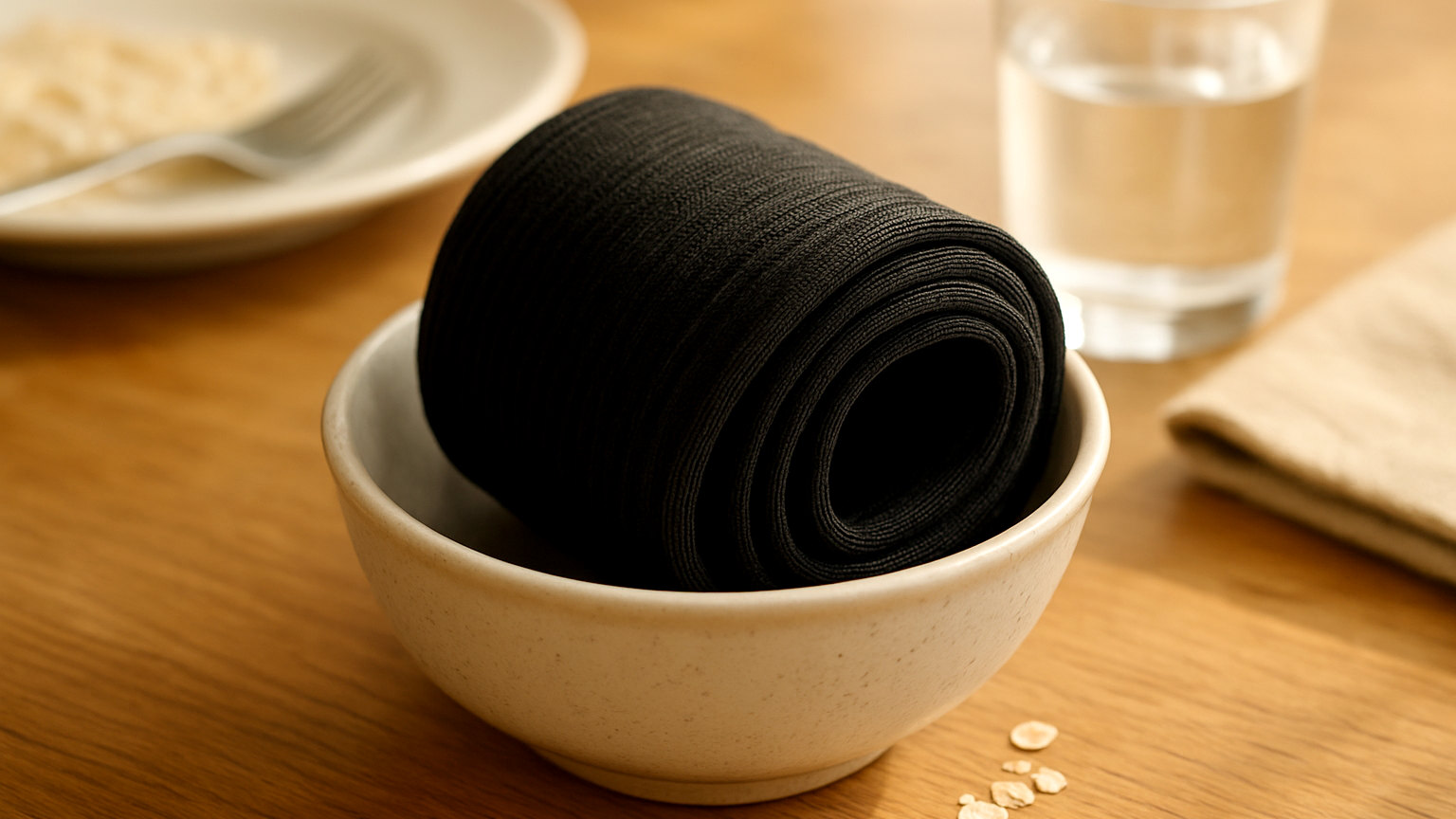
Compression garments are widely used in sport and reasonably well studied. The findings are consistent with the broader pattern for recovery tools: modest effects on sensation, limited effects on function.
What is the proposed mechanism?
Graduated compression is thought to improve venous return, reduce swelling and limit muscle oscillation during activity.
The reduced swelling and mechanical support are the mechanisms most commonly proposed for recovery effects.
What does the research show?
Reviews examining compression garments for recovery have generally reported small reductions in perceived muscle soreness.
Effects on strength recovery and performance have been smaller and less consistent, with several reviews concluding the evidence is limited.
Some studies have reported reduced markers of muscle damage, with findings varying between protocols.
Does the fit matter?
Probably. Compression pressure varies considerably between garments and depends heavily on fit relative to limb size.
Many studies have not measured the actual pressure applied, which makes comparing findings difficult and may explain some inconsistency.
A garment that is comfortable and easy to put on is likely applying less pressure than one used in research.
Do they help during exercise?
Evidence for performance benefits during exercise is weak. Some studies have reported improved proprioception or reduced muscle oscillation without clear performance gains.
Most of the reasonable evidence concerns recovery afterwards rather than performance during.
Are there clearer uses?
- Long haul travel, where compression has established medical benefit for circulation
- Congested competition schedules, where any small recovery benefit is worth having
- Situations where swelling is a specific problem
- Medical use for venous conditions, which is a separate matter with real evidence
The travel application is the one with the strongest independent evidence base.
Do they interfere with adaptation?
No evidence suggests they do, which distinguishes them from cold water immersion.
They can be used routinely without the concern that applies to aggressive anti-inflammatory approaches.
Are they worth the money?
They are not cheap, and the effects are modest and mostly perceptual. For a professional athlete with a congested schedule, small margins matter.
For someone training recreationally, sleep and food would return more for the same investment of attention.
What is the summary?
Small effects on soreness, limited effects on performance, no interference with adaptation. A reasonable optional extra rather than a priority.
This article is general information and not medical advice.
Should you wear them during or after?
Most recovery research has examined wearing them after exercise, often for several hours or overnight.
Wearing them during exercise has weaker evidence for performance and is generally comfortable if the fit suits you.
Do they replace anything?
No. They are an addition to sleep, food and sensible programming rather than a substitute for any of them.
Anyone considering them should be confident the basics are in place first.
What is the summary?
Small perceptual benefits, no interference with adaptation, and a clear use case for long haul travel. A reasonable optional extra.
Fit determines the pressure applied, so a garment that slips on easily is probably not doing much.
Does the evidence vary by sport?
Most research has examined running, cycling and team sports, with findings broadly consistent across them.
Effects on resistance training recovery have been examined less often and appear similarly modest.
What should you check before buying?
That the garment is genuinely compressive rather than simply tight fitting sportswear, and that the size matches your measurements rather than your usual clothing size.
Graduated compression, tighter at the extremity, is what the medical evidence for travel is based on.
They are also easy to combine with other approaches, since nothing about them conflicts with sleep, nutrition or light activity.
For athletes travelling to competition, the circulation benefit during the journey may be the strongest reason to own a pair.
They are also durable, so the cost is spread over years rather than being an ongoing expense like supplements.
Fit matters enough that trying them on before buying, or checking a size chart against actual measurements, is worth the effort.