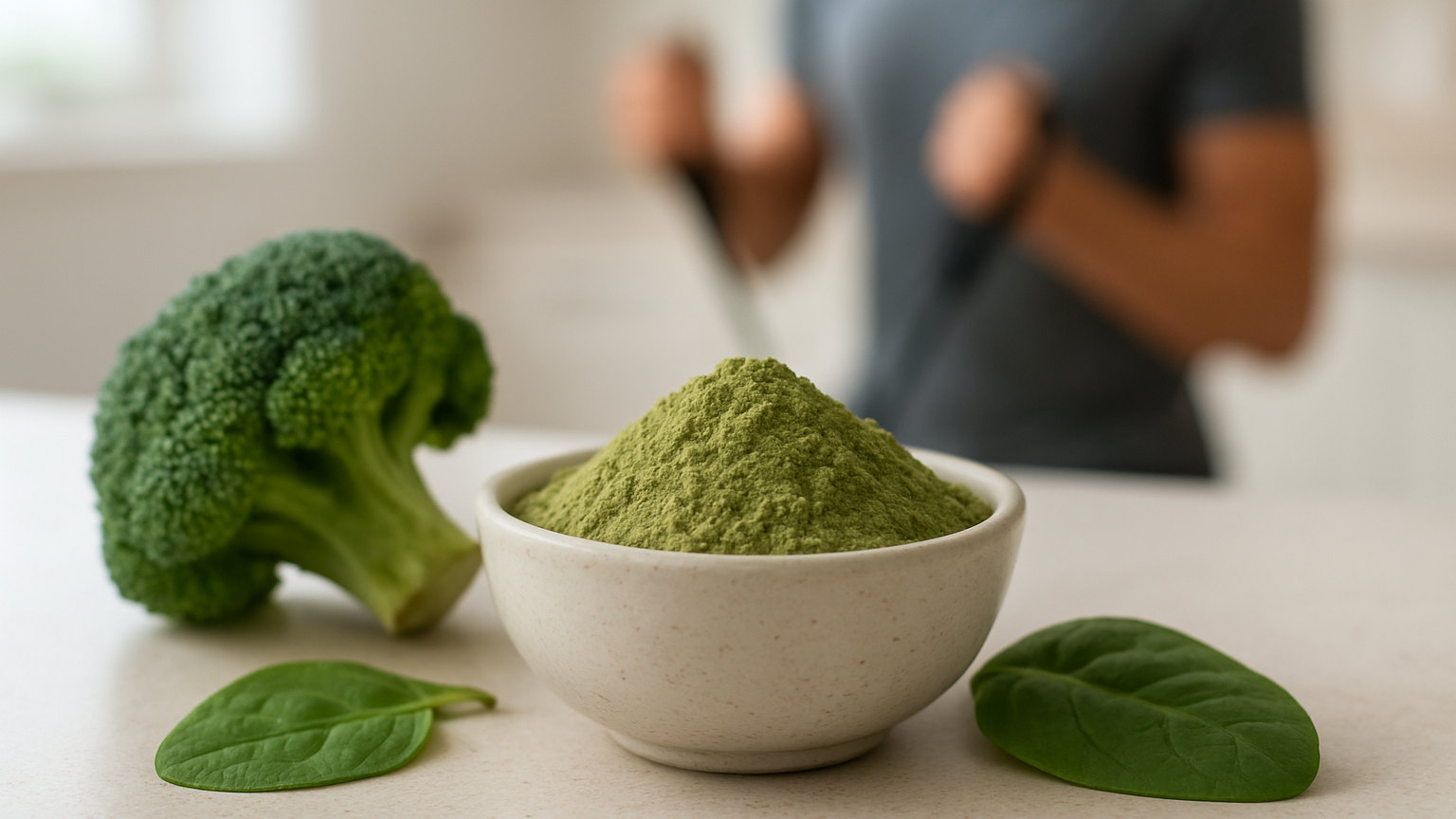
Greens powders are marketed as concentrated food, which makes them seem obviously safe in pregnancy. The ingredient lists suggest otherwise.
What are the concerns?
- Herbal ingredients that have not been tested in pregnancy
- Adaptogens including ashwagandha, which is contraindicated in pregnancy
- Kelp or seaweed supplying variable and potentially excessive iodine
- Heavy metal content, since lead crosses the placenta
- Vitamin A in some formulations, where retinol has established risks
- Caffeine from green tea extract, counting towards the 200mg daily limit
- Unpredictable doses hidden within proprietary blends
Why does the ingredient list matter so much?
Because a product containing forty ingredients requires forty separate safety assessments, and almost none of them have been conducted in pregnancy.
The general principle in pregnancy is to avoid what has not been shown to be safe, rather than to assume safety in the absence of evidence.
What about the iodine question?
Iodine requirements increase during pregnancy, and excess is also harmful, with both deficiency and excess affecting fetal thyroid development.
Seaweed iodine content varies enormously and is often not stated, which makes it impossible to know what you are taking.
What about vitamin A?
Preformed vitamin A, or retinol, is associated with birth defects at high intakes, which is why cod liver oil and liver are avoided in pregnancy.
Beta carotene is different and safe, and checking which form a product contains matters.
What does UK guidance recommend instead?
Folic acid at 400 micrograms daily before conception and through the first twelve weeks, and vitamin D at 10 micrograms daily throughout.
Pregnancy specific multivitamins are formulated to exclude retinol and to supply appropriate amounts of what is needed.
What about breastfeeding?
Similar considerations apply, since herbal ingredients and contaminants can pass into breast milk and have generally not been studied.
What should you do?
Show the ingredient list to a midwife or pharmacist rather than assuming a product marketed as vegetables is equivalent to eating them.
Eating actual vegetables carries none of these questions.
What is the summary?
Generally not advised, because the long ingredient lists include things that have not been assessed in pregnancy and some that are specifically contraindicated.
This article is general information and not medical advice. Discuss any supplement with your midwife.
What about trying to conceive?
The same considerations apply, particularly for ingredients contraindicated in pregnancy, since conception may not be immediately apparent.
Folic acid is recommended from before conception rather than from a positive test.
Who should you ask?
A midwife, GP or pharmacist, showing them the actual ingredient list rather than describing the product.
Taking a photograph of the label makes the conversation considerably more useful.
What is the summary?
Generally not advised, because long ingredient lists include things that have not been assessed in pregnancy and some that are specifically contraindicated.
Pregnancy specific supplements exist and are formulated for the purpose.
What about the first trimester?
This is when organ development occurs and when caution is most important, and also when many women do not yet know they are pregnant.
Anyone trying to conceive should apply the same caution as during pregnancy itself.
What about after birth?
Nutritional demands remain high during breastfeeding, and the same questions about untested ingredients apply.
Eating well and continuing vitamin D supplementation covers what guidance actually recommends.
What is the practical answer?
Avoid them during pregnancy and use a pregnancy specific supplement alongside eating vegetables, which carries none of these questions.
What does guidance actually recommend?
Folic acid, vitamin D, avoiding vitamin A supplements, limiting caffeine to 200 milligrams daily and following food safety advice.
That list is short, specific and well evidenced, which is the opposite of a forty ingredient blend.
What about morning sickness?
Strong tasting drinks are frequently poorly tolerated during early pregnancy, which makes greens powders impractical as well as inadvisable.
Persistent vomiting in pregnancy needs medical assessment rather than a nutritional product.