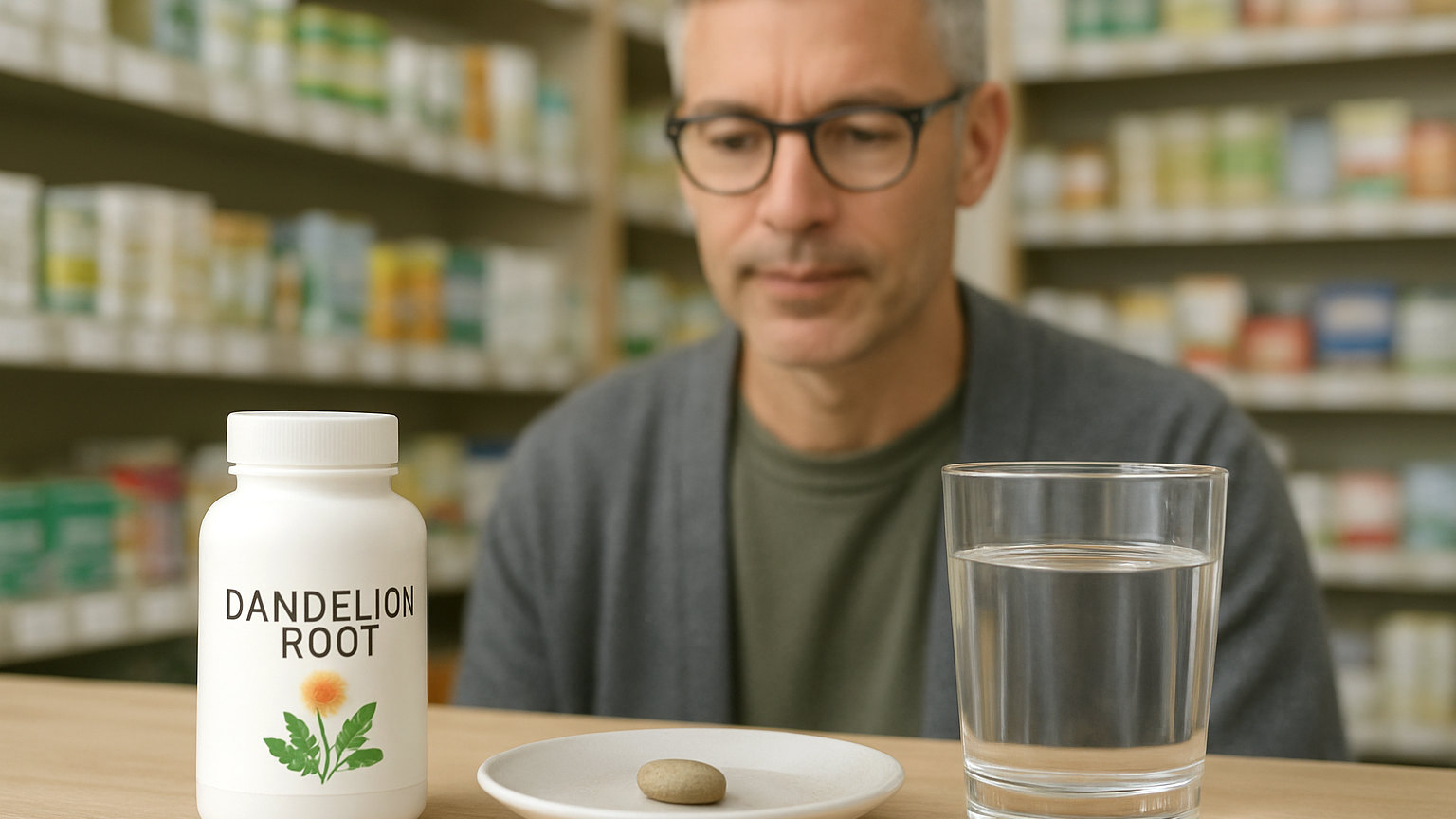
Dandelion root is a fixture of detox teas and liver support products, and it does have genuine physiological effects that are worth separating from the marketing.
What is dandelion root?
The root of Taraxacum officinale, the common lawn weed, used across European herbal traditions and roasted as a coffee substitute.
Dandelion leaf and dandelion root are used differently, with the leaf traditionally used as a diuretic and the root for digestion and bile.
What do people take it for?
Detoxification and liver support, which is how it is most often marketed.
Digestive complaints including bloating and sluggish digestion.
Fluid retention, reflecting its diuretic reputation.
What does detox mean here?
Nothing physiological. The liver and kidneys clear waste products continuously, and no herb improves that process.
Products using the term rarely specify what is being removed or how anyone would know it had worked.
What does it actually do?
Dandelion root stimulates bile production and flow, which aids fat digestion and may explain its traditional use for sluggish digestion.
The leaf has a genuine diuretic action, which is why the plant is called pissenlit in French.
The root is high in inulin, a fermentable fibre that feeds gut bacteria and causes wind in some people.
What does the research show?
Human trials are very limited, and most claims rest on traditional use and laboratory work.
Reviews find insufficient evidence to support the therapeutic claims made for it.
Why does bile stimulation matter?
Because in someone with gallstones, stimulating gallbladder contraction can force a stone into the bile duct and cause severe pain.
Dandelion root is therefore not advised for anyone with gallstones or bile duct obstruction.
Who else should be careful?
- Anyone allergic to plants in the daisy family
- People taking diuretics, where effects may be additive
- Anyone taking lithium, since fluid changes affect its levels
- People on diabetes or blood pressure medication
- Anyone with kidney disease, without advice
What about the potassium claim?
Dandelion leaf is sometimes described as a potassium sparing diuretic because it contains potassium.
This is a traditional characterisation rather than an established pharmacological property.
Is the coffee substitute the same?
Roasted dandelion root drinks supply small amounts and are a caffeine free alternative rather than a supplement.
Is it worth taking?
For mild digestive discomfort it is low risk in people without gallstones or daisy family allergy.
As a detox product it is selling a concept rather than an effect.
What is the summary?
Dandelion root is taken for detox and liver support, genuinely stimulates bile and acts as a diuretic, and should be avoided with gallstones.
This article is general information and not medical advice.
What does detox marketing rely on?
An unstated implication that the body accumulates something harmful that a product removes.
No product in this category identifies what that substance is or measures its removal.
What should you expect?
Increased urine output, some digestive effect from the bile stimulation, and wind from the inulin content.
None of that constitutes detoxification.
Who should avoid it?
Anyone with gallstones, anyone with a daisy family allergy, and anyone taking lithium or diuretics.
People with kidney disease should take advice first.
What should you check on a label?
Whether it is root or leaf, since they are used differently, and what else is in the blend.
Senna in a detox tea is doing something quite different.
What actually supports the liver?
Reducing alcohol, maintaining a healthy weight and taking paracetamol within recommended limits.
Abnormal liver blood tests should be investigated rather than supplemented.
A GP can arrange that.
Who might it suit?
Someone with mild digestive discomfort, no gallstones and no daisy family allergy.
The roasted root drink is pleasant and unproblematic.
Neither is a detox.
Detox is a marketing category rather than a physiological process.
Recognising that makes the whole product group easier to assess.
Bile stimulation is the one genuine effect worth knowing about.