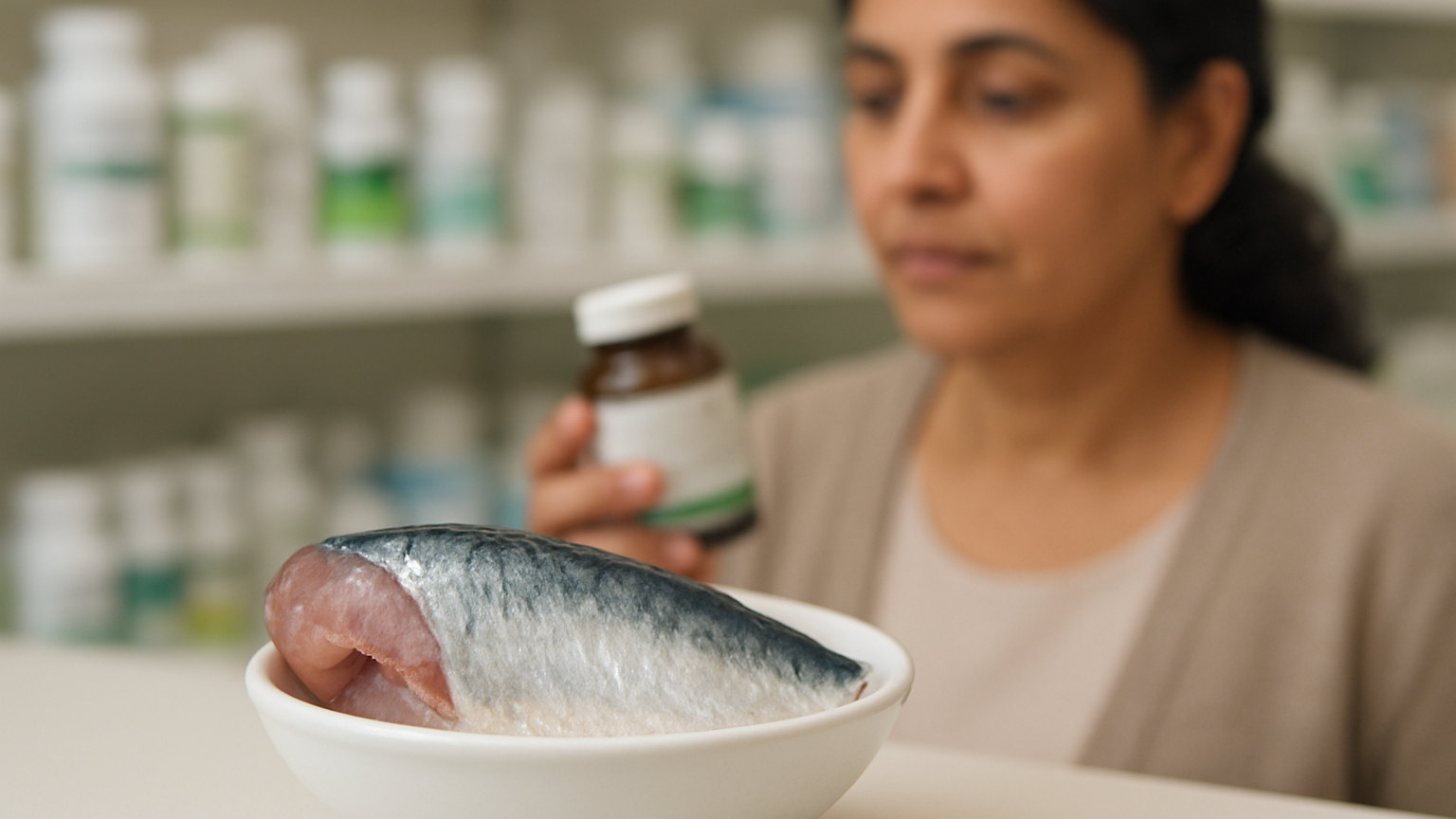
Fish oil and heart health is one of the more instructive stories in nutrition research, involving early enthusiasm, large disappointing trials, and one genuinely established effect that gets less attention than it deserves.
Where did the enthusiasm come from?
Observational research consistently found lower rates of heart disease in populations eating substantial amounts of fish.
Early trials appeared to support this, with some reporting reduced cardiac deaths in people who had already had a heart attack.
The mechanisms were plausible: effects on triglycerides, heart rhythm, blood pressure and inflammation.
What did the large trials find?
Two major trials examining omega 3 supplements in people at risk of cardiovascular disease found no significant reduction in major cardiovascular events.
Meta-analyses of supplement trials have generally found little or no effect on cardiovascular mortality at typical doses.
This has substantially changed guidance, with routine fish oil supplementation for heart protection no longer recommended in most guidelines.
What about the trial that was positive?
One trial using a high dose purified EPA product in people with raised triglycerides on statins reported a significant reduction in cardiovascular events.
The result generated considerable interest and some controversy, since the comparator was mineral oil, which may have adversely affected the placebo group.
A subsequent trial using a different high dose formulation with a different comparator found no benefit, which complicates interpretation further.
What is the established effect?
Triglyceride reduction, which is reliable and dose dependent. Doses of 2 to 4 grams daily typically reduce triglycerides by 20 to 30 per cent.
Prescription omega 3 products exist specifically for this purpose and are used in people with markedly raised triglycerides.
Is there a risk at high doses?
Meta-analyses have found an increased risk of atrial fibrillation with high dose omega 3 supplementation, particularly around 4 grams daily.
This is a genuine finding that has tempered enthusiasm for high dose use outside specific indications.
Why does eating fish look better than supplements?
- Fish supplies protein, selenium, iodine and vitamin D alongside the fats
- Fish may displace less favourable foods from the diet
- People who eat fish differ from those who do not in many ways
- Observational studies cannot separate these effects
What should you do?
Eat oily fish twice weekly if you can, since guidance still supports this and the food comes with other benefits.
Do not take fish oil supplements expecting to prevent heart attacks. If you have raised triglycerides, discuss it with a GP rather than self treating.
This article is general information and not medical advice.
What about blood pressure and rhythm?
Omega 3 produces small reductions in blood pressure, generally a couple of millimetres of mercury, which is modest at an individual level.
Effects on heart rhythm are complicated, with early interest in antiarrhythmic properties largely giving way to the atrial fibrillation concern at high doses.
Has guidance changed?
Substantially. Many cardiology guidelines no longer recommend routine omega 3 supplementation for cardiovascular prevention.
Dietary advice to eat fish has generally been retained, which reflects the difference between the food and the supplement evidence.
What is the summary?
Fish looks protective in observational research, supplements have largely failed in trials, and triglyceride lowering is the one solid effect.
Eat the fish, and do not expect capsules to prevent heart attacks.
Does the population matter?
Trials in people already taking statins and other modern cardiovascular treatments have less room to demonstrate benefit than those conducted decades ago.
This partly explains why early trials looked more promising than recent ones, since background treatment has improved substantially.
Who might still benefit?
People with markedly raised triglycerides, where the effect is established and prescription products exist for the purpose.
That is a medical decision rather than a supplement aisle one.
The gap between what fish appears to do and what capsules demonstrably do is one of the clearer illustrations of why food and supplement evidence should be kept separate.
Anyone with existing heart disease should follow the advice of their cardiology team rather than making supplement decisions independently.