Fish oil labels are designed to be compared favourably rather than accurately. A short checklist reveals more than the front of the bottle.
What is the most important number?
Combined EPA and DHA content per capsule, not the total fish oil weight.
A 1000 milligram fish oil capsule typically contains around 300 milligrams of EPA and DHA, with the remainder being other fats.
Concentrated products can supply 500 to 800 milligrams or more per capsule, which changes how many you need to take.
Does the form matter?
Fish oil comes as natural triglycerides, re-esterified triglycerides or ethyl esters.
Ethyl esters are produced during concentration and some research suggests slightly lower absorption than triglyceride forms, particularly without a fatty meal.
The difference is modest and generally smaller than differences in dose between products.
What about testing certification?
Third party programmes test for contaminants including mercury, dioxins and PCBs, and some also test for oxidation.
Products carrying such certification provide reassurance that fish oil is not otherwise easy to verify, given how readily it oxidises.
How do you judge freshness?
- Check the expiry date and buy from shops with good turnover
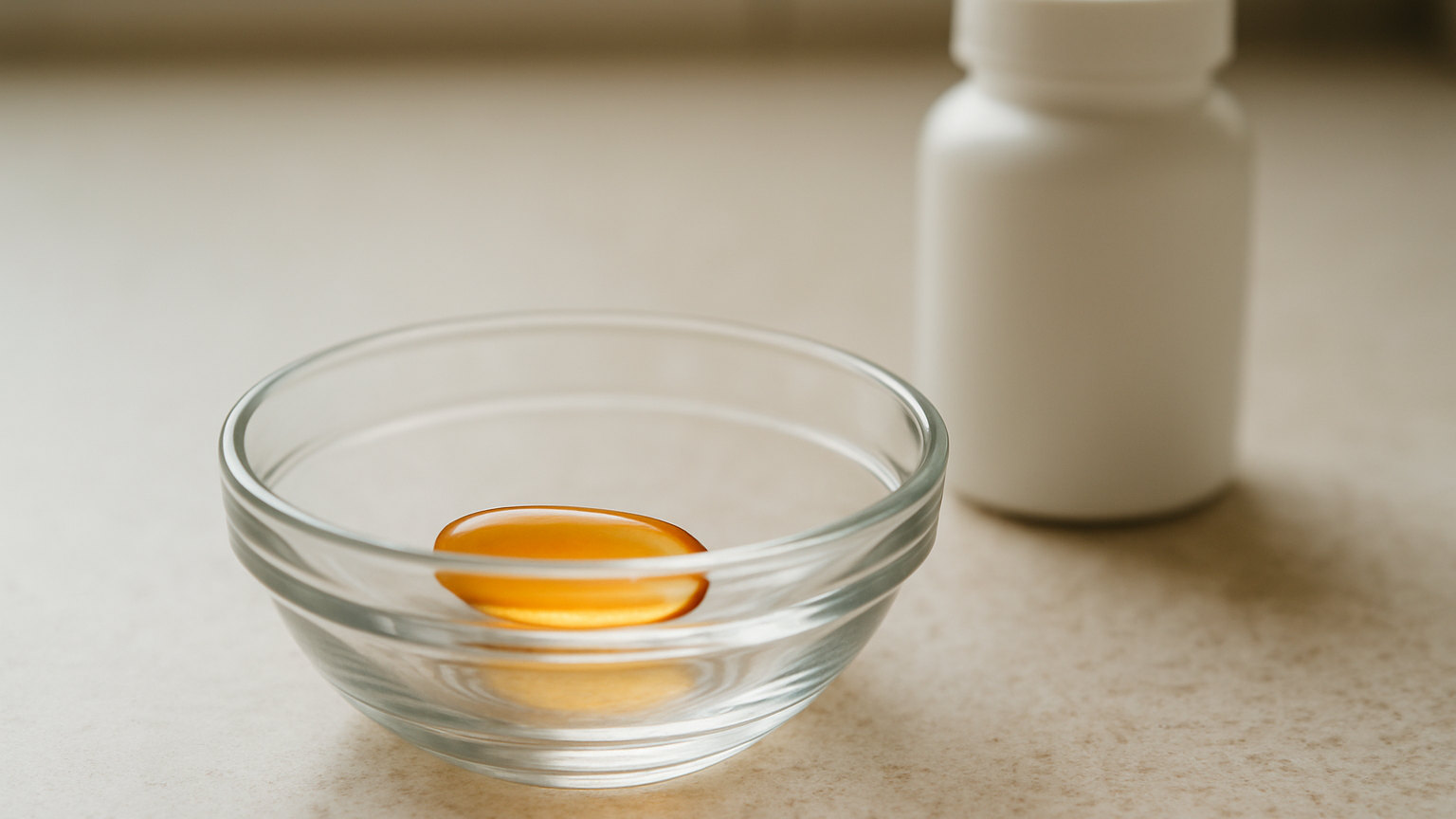
- Cut a capsule open and smell it, which should be mild rather than strongly fishy
- Note whether the fishy repeat is severe, which often indicates oxidation
- Prefer opaque packaging that protects from light
- Store in the fridge once opened
What should you calculate?
Cost per gram of combined EPA and DHA, which is the only comparison that means anything across products.
Multiply the EPA and DHA per capsule by the number of capsules, then divide the price by that total.
This frequently reverses which product appears better value, since larger capsule counts and higher concentrations pull in different directions.
What about the source fish?
Small fish low in the food chain, such as anchovies and sardines, accumulate fewer contaminants than larger species.
Many products state the source, and those using small fish have a modest advantage on contaminants.
Should you take it with food?
Yes. Absorption of fat soluble compounds improves with a meal containing fat, and taking it with food reduces reflux and fishy repeat.
Splitting the dose across two meals also helps if you find one dose uncomfortable.
What can you ignore?
Claims about purity without certification, terms like premium or ultra, and small amounts of added ingredients that pad the label.
What is the summary?
Compare EPA and DHA per capsule, check for testing certification, calculate cost per gram of active fats, and treat freshness as part of quality.
This article is general information and not medical advice.
Should you buy the largest bottle?
Not necessarily. A large bottle takes longer to finish, which means more time for oxidation once opened.
Buying a size you will finish within a couple of months is a reasonable compromise between cost and freshness.
What about combined products?
Fish oil combined with vitamin D, multivitamins or other ingredients makes dose comparison harder and often supplies less omega 3.
Buying components separately gives control over each and usually costs less.
What is the summary?
EPA and DHA per capsule, third party testing, cost per gram of active fats, and freshness. Four checks that take a minute and tell you everything useful.
Does the price reflect quality?
Not reliably. Concentration, testing and freshness matter more than price, and expensive products are not automatically better on any of them.
Certification and a clear EPA and DHA figure are better indicators than cost.
What about vegetarian options?
Algae oil is the equivalent product and should be compared the same way, on combined EPA and DHA per capsule and cost per gram.
Check whether it supplies EPA as well as DHA, since some products contain only the latter.
Once you have found a product that meets these criteria, sticking with it saves repeating the exercise every time you reorder.
Buying from a retailer with reliable turnover also helps, since a bottle that has sat on a shelf for a year is less fresh regardless of the expiry date.