Peppermint oil is one of the few herbal preparations that appears in mainstream clinical guidance, which puts it in a different category from most supplements.
What is peppermint oil?
The essential oil distilled from Mentha piperita, containing menthol as its principal active component.
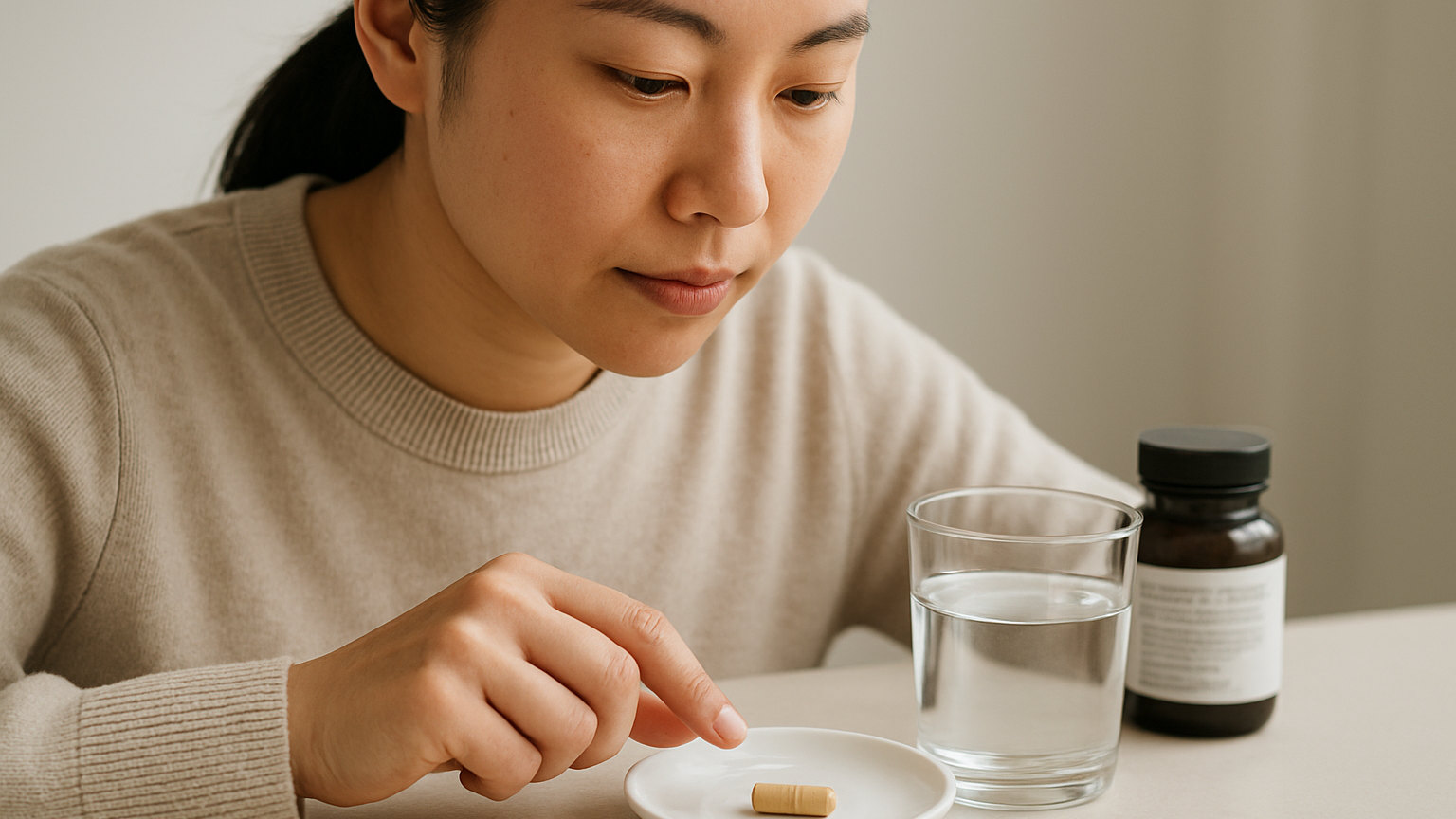
For digestive use it is taken as enteric coated capsules, which resist stomach acid so the oil is released further down the gut.
What do people take it for?
Irritable bowel syndrome, specifically abdominal pain, cramping and bloating.
It is also used topically for tension headaches and inhaled for congestion, both separate from the digestive use.
What does the research show?
Meta-analyses of peppermint oil in IBS have reported improvements in abdominal pain and overall symptoms compared with placebo.
The effect is consistent enough that peppermint oil appears as an option in UK guidance for IBS symptom management.
Trials have generally run four to twelve weeks.
How does it work?
Menthol relaxes smooth muscle in the gut wall by affecting calcium channels, which reduces spasm.
This is the same principle behind prescribed antispasmodic medicines.
Why does the enteric coating matter?
Uncoated peppermint oil releases in the stomach, where it relaxes the valve at the top of the stomach and causes heartburn.
Enteric coated capsules deliver the oil to the small intestine where it is needed and largely avoid this.
Taking capsules with food can cause them to release too early, so they are usually taken before meals.
What are the side effects?
- Heartburn and reflux, the most common complaint
- A cooling sensation on passing stool
- Nausea occasionally
- Allergic reactions rarely
Who should avoid it?
Anyone with significant reflux disease or a hiatus hernia, since peppermint oil can worsen both.
People with gallstones or bile duct obstruction.
Infants and young children, where menthol should not be applied near the face.
Does it interact with medicines?
It may affect absorption of medicines taken at the same time, and enteric coated capsules should not be taken alongside antacids, which can dissolve the coating early.
When should you see a GP?
Bleeding, unexplained weight loss, a persistent change in bowel habit, or new symptoms starting after 50.
IBS is diagnosed after excluding other causes rather than assumed.
What is the summary?
Peppermint oil is taken for IBS, has genuine evidence and appears in guidance, and needs to be enteric coated and spaced from antacids.
This article is general information and not medical advice.
What dose is used?
Trials have commonly used around 180 to 225 milligrams of peppermint oil daily, split across two or three enteric coated capsules.
Products vary, and checking the oil content per capsule allows comparison.
Does peppermint tea do the same?
No. Tea supplies a small fraction of the oil used in trials and releases it in the stomach rather than the intestine.
It is a pleasant drink rather than a treatment for IBS.
How long should you try it?
Trials generally ran four weeks or longer, so a fair test means several weeks of consistent use.
Symptoms fluctuate, which makes short assessments unreliable.
Who might it suit?
Someone with diagnosed IBS whose main symptoms are pain and cramping, and who does not have significant reflux.
It is among the more defensible supplement choices in this whole guide.
What else helps IBS?
Dietary approaches including the low FODMAP diet with dietitian support, soluble fibre, and gut directed psychological therapies.
Prescribed antispasmodics work through a similar mechanism to peppermint oil.
What should you check on a label?
That capsules are enteric coated, the oil content per capsule, and the dosing instructions relative to meals.
Uncoated peppermint oil capsules are a different product and will mostly cause heartburn.
That single check matters more than any other here.
Is it available on prescription?
Peppermint oil capsules are available both over the counter and on prescription in the UK, which reflects its position in guidance.
That is unusual among the products covered in this guide.