Working out what dose you are taking requires more label reading than most supplements, because several different numbers appear and they mean different things.
What doses do trials use?
Most clinical trials have used between 500 and 1500 milligrams of curcuminoids daily, often split across two or three doses.
Some studies have used considerably more, up to several grams, particularly in cancer research where much higher amounts have been tested.
Trials frequently used enhanced bioavailability formulations at lower nominal doses, which complicates direct comparison with a plain extract.
What do labels actually state?
- Turmeric root powder, which is only two to five per cent curcuminoids
- Turmeric extract, usually standardised to 95 per cent curcuminoids
- Curcuminoid content, the figure that matters
- Curcumin specifically, a subset of total curcuminoids
- A branded formulation name with its own dosing
A capsule stating 500 milligrams of turmeric root supplies perhaps 10 to 25 milligrams of curcuminoids, which is a very different product from one stating 500 milligrams of curcuminoids.
How do you calculate it?
If the label states an extract standardised to 95 per cent curcuminoids, multiply the extract weight by 0.95.
If it states turmeric root powder without standardisation, assume a few per cent at most.
If it states a branded formulation, look up what dose that formulation was studied at, since these differ substantially.
Does more mean better?
No clear dose response has been established across the studied range, and higher doses increase the likelihood of digestive side effects.
Very high doses also feature in some of the liver injury case reports, which is a reason for restraint.
How should it be taken?
With food containing fat, since curcumin is fat soluble and absorption improves substantially with a meal.
Splitting the dose across two administrations matches most trial protocols and may maintain blood levels better given rapid clearance.
How long before judging?
Trials in joint pain generally ran eight to twelve weeks, so shorter periods are unlikely to tell you anything.
What is the summary?
Look for curcuminoid content rather than turmeric weight, expect 500 to 1500 milligrams daily, take it with food, and allow three months.
This article is general information and not medical advice.
Should you split the dose?
Most trials did, using two or three doses daily, which matches the rapid clearance of curcumin from the blood.
A single large dose produces a brief peak rather than sustained exposure.
What about very high doses?
Doses of several grams daily have been used in research settings, particularly in cancer studies, generally with monitoring.
These are not appropriate for unsupervised use, and higher doses feature in some of the adverse event reports.
What is the summary?
Look for curcuminoid content rather than turmeric weight, expect 500 to 1500 milligrams daily split into doses, take it with food and allow three months.
The number on the front of the packet frequently refers to something other than what you need to know.
How does this compare with the spice?
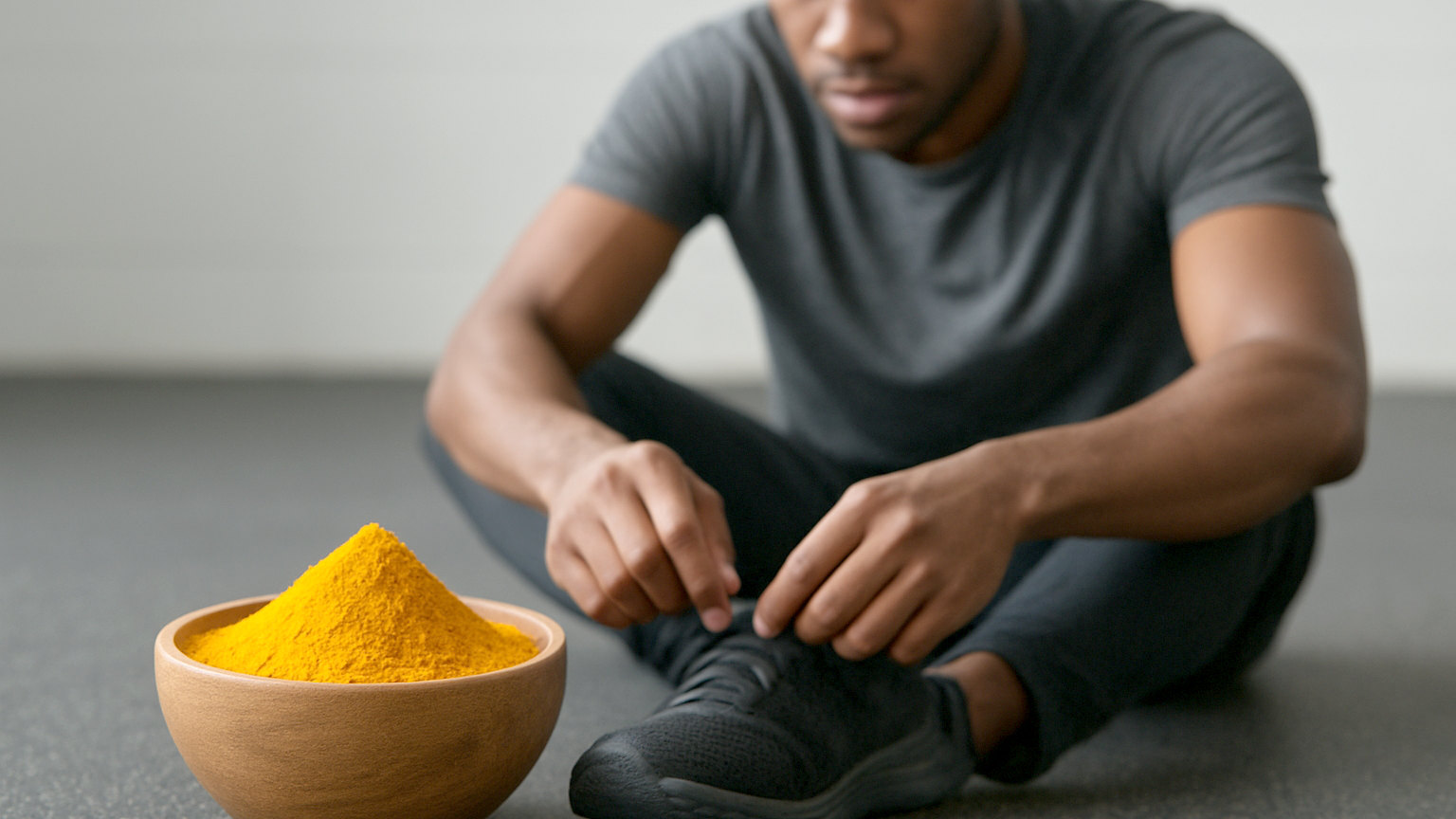
A single 500 milligram curcuminoid capsule supplies more than a tablespoon of turmeric powder would, which puts the difference in perspective.
That gap is the entire reason supplements exist for this compound.
What does a typical product supply?
Products vary from around 20 milligrams of curcuminoids per capsule at the low end to 500 milligrams or more in standardised extracts.
Checking that figure before buying prevents purchasing something that would need twenty capsules a day to reach a studied dose.
What is the practical checklist?
Curcuminoids in milligrams, split dosing, taken with food containing fat, at 500 to 1500 milligrams daily, for at least eight to twelve weeks.
That covers everything the trial protocols involved without complicating it further.
Does the brand matter for dosing?
Branded formulations often use lower nominal doses because their absorption is better, so comparing milligrams across different formulations is misleading.
Where a product uses a named formulation, look up the dose used in its own research rather than applying a general figure.