Kava is the clearest case in this guide of a herbal supplement whose efficacy evidence is reasonable and whose safety record ended its availability.
What is kava?
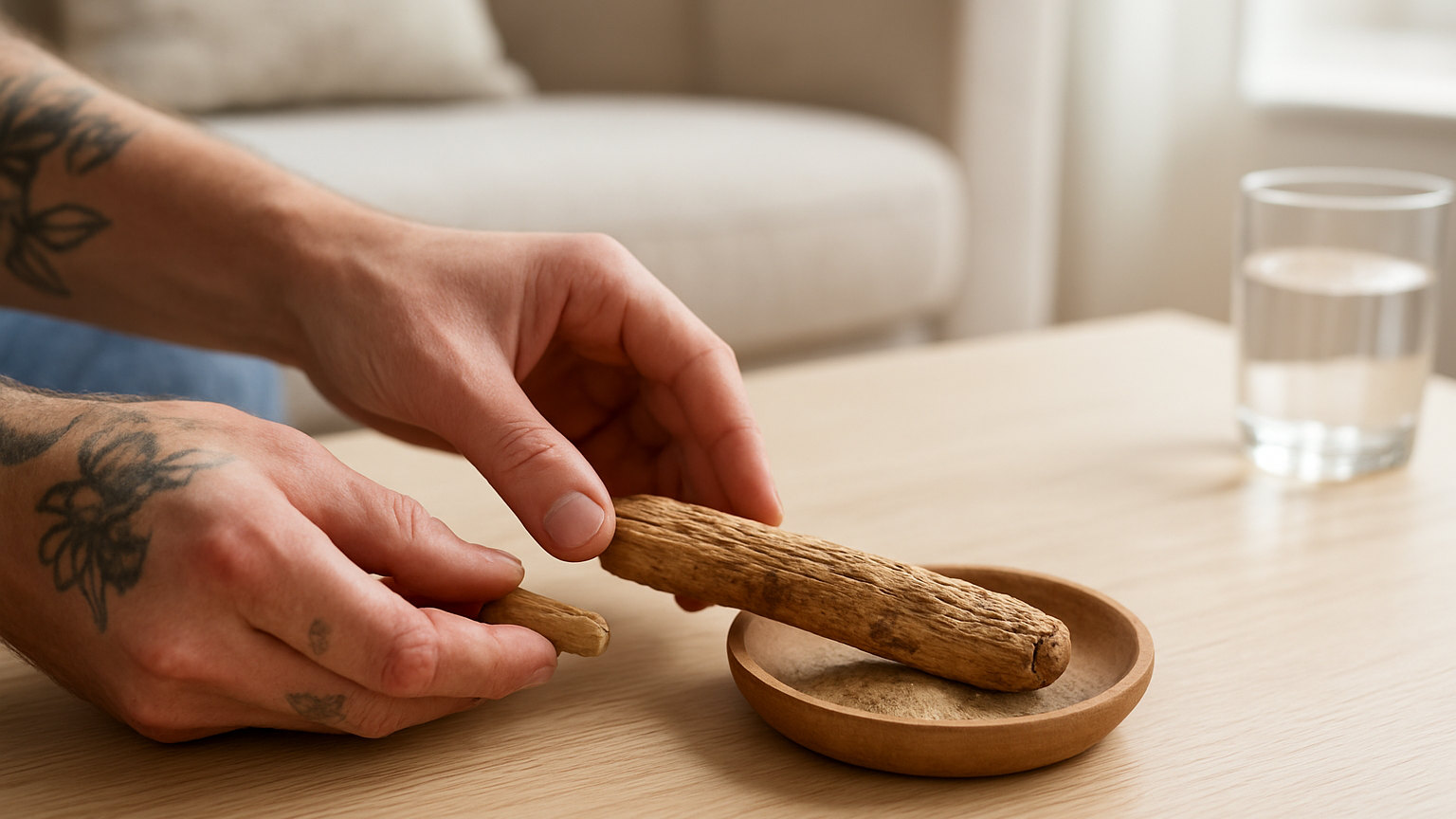
The root of Piper methysticum, a Pacific island plant prepared traditionally as a ceremonial and social drink.
The active compounds are kavalactones, which produce calming and mildly sedating effects.
What do people take it for?
Anxiety, which is by far the main use.
Sleep and muscle tension, following from the same effects.
What does the research show?
A Cochrane review of kava for anxiety concluded that it was more effective than placebo, with a modest effect size.
That is a stronger finding than most herbal anxiety products achieve.
What went wrong?
Reports of severe liver injury began accumulating around the turn of the century, including cases of liver failure requiring transplant and some deaths.
Regulators across Europe and elsewhere reviewed the evidence and took action.
Kava has been restricted in the UK since the early 2000s and is not permitted in food supplements or unlicensed medicines.
Why did the liver injury happen?
The mechanism has not been fully established, and several explanations have been proposed.
These include the plant part used, since traditional preparation uses the root while some commercial extracts used stems and leaves.
Extraction solvent has also been suggested, since traditional preparation uses water while commercial extracts used acetone or ethanol.
Individual susceptibility and interaction with other substances may also contribute.
Does traditional use carry the same risk?
Pacific island populations have used water prepared kava for centuries, and the pattern of severe liver injury seen with commercial extracts has not been described in the same way.
That observation supports the preparation and plant part explanations without settling them.
What are the other effects?
- Sedation, which is additive with alcohol and sedating medicines
- Impaired driving ability
- A characteristic dry scaly skin condition with heavy long term use
- Interactions with medicines metabolised by the liver
Can you still obtain it?
It remains available through overseas online sellers, which places it entirely outside UK oversight.
Products obtained that way carry no assurance about plant part, preparation or contamination.
What should you use instead?
Cognitive behavioural therapy has strong evidence for anxiety and is available through the NHS.
Prescribed treatment is appropriate for some people, and a GP can discuss the options.
What does kava illustrate?
That efficacy and safety are separate questions, and that a product can perform reasonably on one and unacceptably on the other.
What is the summary?
Kava is taken for anxiety and has genuine trial evidence, and it was restricted in the UK following severe liver injury reports including deaths.
This article is general information and not medical advice.
Who should take it?
Nobody in the UK, given the restriction and the seriousness of the reported harm.
Anyone who has taken it and develops jaundice, dark urine or persistent nausea should seek medical advice.
What is the wider lesson?
That preparation method and plant part can determine whether a traditional remedy is safe.
Commercial extraction is not the same as traditional use.
What was the scale of the problem?
Dozens of cases of serious liver injury were reported internationally, including transplants and fatalities.
For a supplement taken for mild anxiety, that risk profile was not acceptable to regulators.
Several countries acted within a short period.
What should you do instead?
Speak to a GP about anxiety, since effective treatments exist and self referral to talking therapies is available in many areas.
Waiting rarely improves anxiety on its own.
Asking for help is straightforward.
What about products sold abroad?
Kava remains available in some countries and through overseas sellers, with no assurance about plant part or extraction.
Buying it that way places you entirely outside UK oversight.
The restriction exists for documented reasons.
What is the honest position?
Reasonable anxiety evidence and a safety record serious enough that regulators removed it from sale.
Both facts are true and only one determines the outcome.