Vitamin A on a label can mean two quite different things. Retinol is preformed vitamin A, ready to use and found in animal foods. Beta carotene is a plant pigment the body converts into vitamin A as required. The distinction matters mostly because of what happens when you take too much.
What is retinol?
Retinol and its ester forms, retinyl palmitate and retinyl acetate, are the active vitamin A found in liver, oily fish, egg yolk, dairy and fortified spreads.
It requires no conversion, absorbs efficiently, and is stored in the liver. Those stores can last months, which is useful for maintaining supply and problematic when intake is consistently high.
What is beta carotene?
Beta carotene is one of several carotenoids, the pigments giving orange, yellow and dark green vegetables their colour. Alpha carotene and beta cryptoxanthin also convert to vitamin A, though less efficiently.
Conversion happens mainly in the intestinal wall, using an enzyme that splits the molecule. Crucially, that enzyme is regulated according to vitamin A status.
When your stores are adequate, conversion slows. This feedback is why beta carotene from food does not cause vitamin A toxicity, and it is the single most important difference between the two.
How efficient is the conversion?
Considerably less than people assume. Current estimates suggest roughly 12 micrograms of dietary beta carotene yields 1 microgram of retinol activity, and around 24 micrograms for other provitamin A carotenoids.
Efficiency varies with the food matrix, with cooking, with how much fat is eaten alongside, and between individuals. Genetic variation in the converting enzyme means some people convert substantially less well than others.
This is why labels use retinol activity equivalents, which account for the difference rather than simply adding the two together.
How do you get more from vegetables?
- Eat them with some fat, which markedly improves carotenoid absorption
- Cook them lightly, which breaks down cell walls and releases the pigment
- Chop or puree, which increases the surface area available
- Include a variety, since different vegetables supply different carotenoids
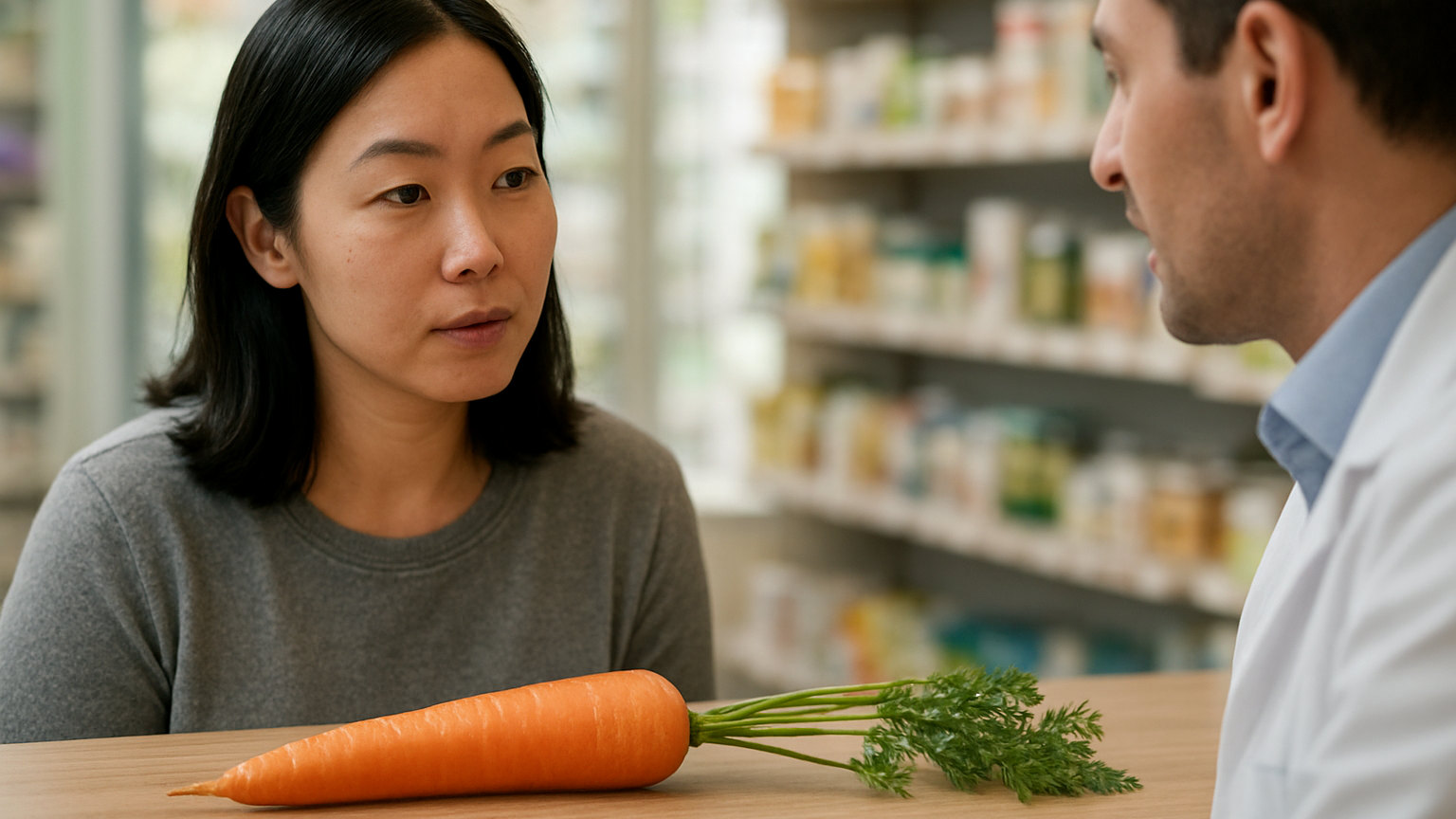
Raw whole carrots eaten alone deliver far less than lightly cooked chopped carrots with a little oil. This is one of the more useful practical points in nutrition.
What are the safety differences?
Retinol accumulates and causes harm at sustained high intakes, including liver damage, bone thinning and birth defects. The UK advisory limit is 1500 micrograms a day from all sources for adults.
Beta carotene from food does not cause vitamin A toxicity. Very high intakes cause carotenaemia, a faint orange tint to the skin most visible on the palms, which is harmless and reverses.
High dose beta carotene supplements are a different matter. Two large trials in smokers and asbestos exposed workers found increased lung cancer rates in the supplemented groups, and one was stopped early. High dose beta carotene supplements are specifically not advised for smokers.
Which should you get from where?
For most people the sensible arrangement is retinol from ordinary food and carotenoids from vegetables, without supplementing either.
Pregnant women should avoid retinol supplements and liver entirely, while vegetables remain unrestricted and worth eating.
Vegans obtain vitamin A entirely from carotenoids, which works, though conversion efficiency and fat intake both matter more in that context.
What should you check on a label?
Look at which form is listed. Retinol, retinyl palmitate and retinyl acetate are preformed. Beta carotene is the precursor. Many multivitamins contain both.
Does the orange skin effect matter?
Carotenaemia gives skin a faint orange or yellow tint, most obvious on the palms and soles, and it is entirely harmless. It appears with sustained high carotenoid intake, classically from carrot juice or a great many sweet potatoes.
It is distinguished from jaundice by the whites of the eyes, which stay white in carotenaemia and turn yellow in jaundice. The tint fades over weeks once intake reduces.
Add up all sources including fortified spreads and cod liver oil. This article is general information and not medical advice.